

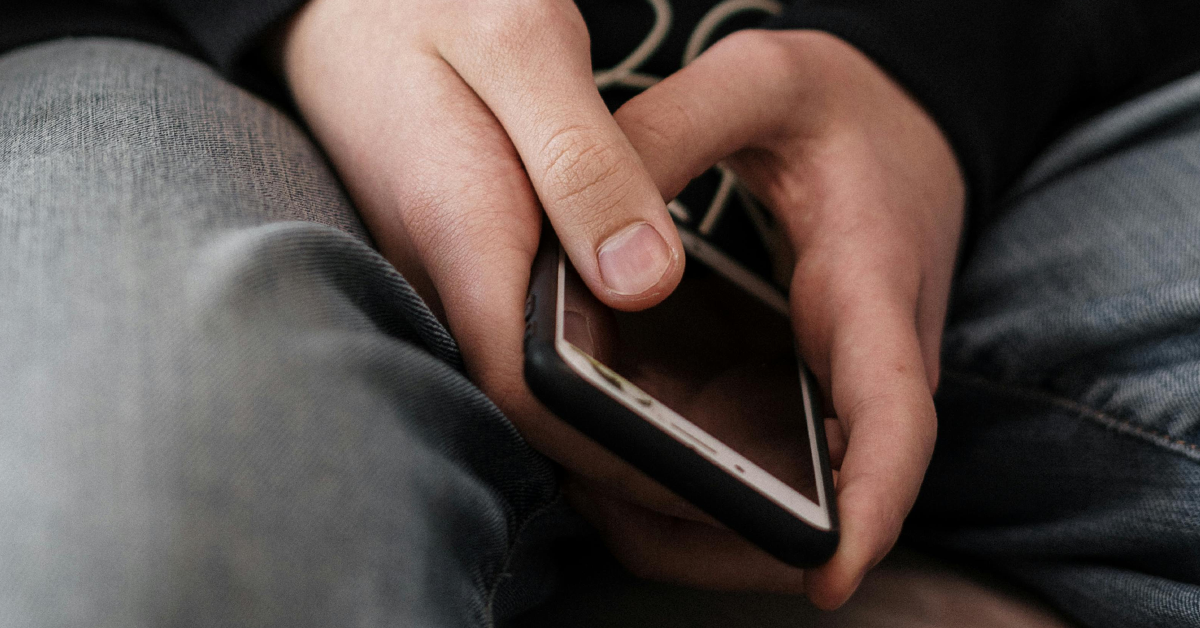
On Wednesday, Marc Balanda, Principal of Brookfield High School, emailed a statement to Brookfield High parents announcing the introduction of a strict, new student cell-phone policy. The policy is slated to go into effect for the 2024-2025 school year.
“Effective this school year, we are expanding our existing policy to set clearer boundaries on cell phone usage,” wrote Balanda. “While we are not banning cell phones, it is crucial to moderate their usage to create a more conducive learning environment and prioritize our students’ well-being.”
The policy will require students to place cell phones, earbuds and headphones in a designated ‘cell phone holder,’ located in every classroom and office. Students will not be allowed to use their phones during class or individual learning periods, nor can they retrieve their phones if they get a hall pass or are called to the office. The only times students will be permitted to use their phones will be before and after school, during passing time, study hall, or lunch. The policy will allow exceptions for students with individualized education programs on a case-by-case basis.
Balanda wrote that the policy hopes both to minimize the distractionary and disruptive impact phones can have on students’ education, and reduce the negligent impact phones could have on students’ mental health.
The idea of cell-phone restricted schooling has been gaining steam in recent years. Governor Ned Lamont touched on the issue of cell phones in this year’s State of the State address, recommending districts create policies which would limit students’ phone usage in a similar vein to what Brookfield now intends to do.
“We will be sending out guidance to your school board – have your younger students leave their smartphones at home or drop them in a Yondr pouch at the start of every school day,” Lamont said during the speech, as quoted by CTInsider. Yondr is a company that sells lockable cell phone pouches, which are already being used by Connecticut school districts such as Torrington and Manchester.
Lamont went as far as including language pertaining to the development of a cell-phone use policy by the State Board of Education in an education bill he introduced in this year’s legislative session. While the bill passed and was signed into law, this language did not make it into the final form of the bill.
Despite the language’s was removal, several Connecticut teachers, and even Department of Education Commissioner Charlene Russel-Tucker, submitted testimony in support of it. Russel-Tucker cited a 2020 National Center for Education Statistics survey in her testimony, which found that 77 percent of schools surveyed had already moved to banning non-academic use of phones, and claimed that the Department had already begun researching model cell-phone policies.
“Last year, the U.S. Surgeon General released an advisory on youth mental health, citing that social media exposure is particularly damaging to students and can contribute to poor mental health, including depression and anxiety,” read Russel-Tucker’s testimony. “These devices are also a serious distraction in the classroom and can be an impediment to learning.”
Brookfield High parents took to discussing the policy under a post made on the Municipal Matters Brookfield Facebook group. It received a mixed reaction overall; while many parents approved of the policy and thought it long overdue, many others were concerned at the thought of having reduced communication with their children in the case of emergencies. Others agreed with the intent of the policy, but questioned if there may be better ways to implement it.
“We understand that cell phones are a significant part of our daily lives and that setting boundaries is important for our students to learn how and when to use them appropriately,” wrote Balanda. “This policy is designed to prioritize learning and foster positive student interactions, while also acknowledging the importance of cell phones in modern life.”



This is great legislation to remove cell phones from the classrooms. Our nation is great because of the educational systems in place over the past couple hundred of years. Cell phones are a distraction and we got along very well without them. I work for the Department of Defense and when we enter a secure room or building, we must put our cell phones in cubbies. I even leave my cell phone in my room some days while on deployments when I go to work. This will help today’s younger generation focus on what’s important – what’s in front of them during class.
What are °students with individualized education programs” and why do they need to use phones in class?
Good morning Gary –
Individualized Education Programs (IEPs) are education plans “tailored to meet the individual needs of students with disabilities. The program is written in collaboration between a child’s school district, their parent or guardian, and sometimes, the student.” (EdWeek.org)
I also spoke with a source who has a Doctorate in Special Education to provide some additional context, and she said that phones are sometimes used to overcome communication barriers, or may help with medication needs or curriculum access/ learning tools the schools couldn’t provide.
She also said that some applications “are just BS” and applauded the move to limit cell phone use generally – but could also see cases where separation from phones means separation from necessary support networks – so believes it is proper to evaluate the validity of an exception on a case-by-case basis.
Hope this helps!
Conner Drigotas
Managing Editor
This policy should be national especially in the workplace. Especially in nursing homes where cellphone usage is off the charts. Including professional staff. Ie. St John Paul nursing home Danbury Connecticut.