
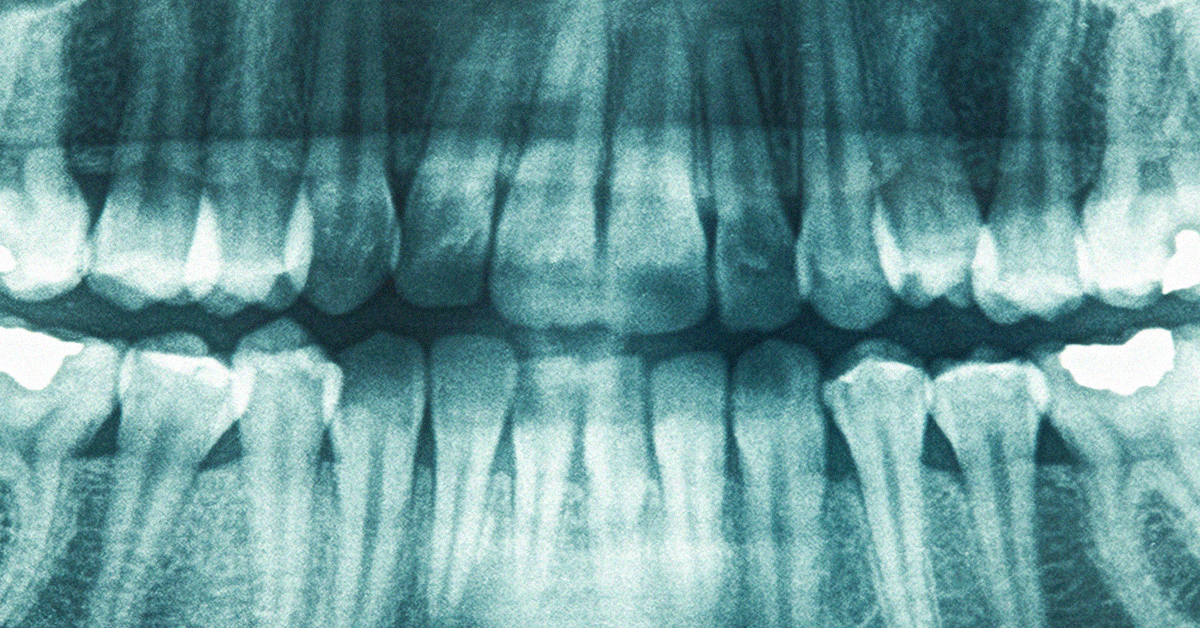

Would you trust a dentist who committed fraud?
Connecticut licensing officials seem to.
Earlier this year, one dentist pleaded guilty to criminal Medicaid fraud, and two others made settlements with the state to end Medicaid fraud investigations. Dentists Lakshmi Bethi, Stanislav Gintautas, and Tatiana Agababaeva are all accused of hiring the same man, Jeffrey Malave, to recruit Medicaid patients for their practices. In total, they committed hundreds of thousands of dollars of fraud and have agreed to pay millions in restitution, according to statements from the U.S. Department of Justice.
Each of them still has their dentist license. At least one of them, Bethi—who pled guilty to the criminal offense—is still practicing.
Inside Investigator uncovered more than a dozen examples of healthcare professionals who engaged in Medicaid fraud in the last two decades keeping their licenses after a guilty plea, settlement, or conviction. There are additional dentists who have committed other offenses—including ones involving substance abuse and incompetence — that were found guilty of or consented to be punished for fraud in the past.
State regulators did not revoke their licenses and took years to update public records that would notify the public of these crimes.
Gintautas, Agababaeva and Bethi will be reviewed by the Dental Commission at some point in the future.
According to Chris Boyle, the spokesman for the Department of Public Health (DPH), every fraud case brought to the board is reviewed, and online licensing portals are updated within two days of final decisions. However, it is unclear how long it will take for these three dentists to face a disciplinary board.
As of Dec. 18, none of the dentists had scheduled hearings.
“Each case is unique and there are many factors that determine the length of time from investigation to prosecution against license,” Boyle wrote in an email. “These factors include the length of time it takes for the Department’s investigators to obtain records related to the case (e.g. court settlements are often made without admitting guilt or wrongdoing and the records are sealed).”
It is unlikely that any of the three will be suspended, let alone have their license revoked.
“Suspension or revocation typically occur in cases in which the Dental Commission has determined that continued practice by the practitioner may pose a direct threat to public health and safety,” according to Boyle.
Boyle did not answer questions about what “safety” meant.
None of the members of the Dental Commission responded to requests for comment about their decision-making process.
Health is a multi-trillion-dollar industry in the United States. In 2022, Medicaid spending surpassed $805 billion. Another $944 billion was spent on Medicare programs as well.
No one, including those tasked with oversight, knows the full extent of Medicaid and Medicare fraud. Depending on the estimate, between 3% and 10% of all healthcare expenditures are for fraudulent purposes or claims, according to the National Health Care Anti-Fraud Association (NHCAA). That translates to tens of billions of dollars being stolen on the low end, and over $300 billion on the high end.
Control of anti-fraud efforts and attempts to recover money are handled by Medicaid Fraud Control Units (MFCUs). MFCU’s are a subset of the U.S. Department of Health and Human Services. Each state, the District of Columbia, Puerto Rico and the U.S. Virgin Islands has an MFCU. Usually, they work with State Attorney Generals to investigate and prosecute acts of fraud. They also work with state officials to find and punish the abuse and neglect of residents in healthcare facilities, and other forms of mistreatment of people enrolled in Medicaid in noninstitutional settings.
In 2022, only $1.1 billion was recovered by MFCUs across the United States, according to the most recent annual report. Around $450 million was recovered through criminal trials, and the rest came through civil settlements and judgments.
That same year, Connecticut’s MFCUs recovered around $27 million in the state, according to Becker’s Hospital Review.
Fraud stretches across all medical fields and professions. It’s not just doctors—technicians, hygienists, nurses and clinic employees can also engage in fraud. It is hard to pinpoint a specific breakdown of offenders by profession or role at the state level—the most recent report on Medicaid fraud in Connecticut that contained a breakdown of crimes by profession was published in 2013 and only reviewed fraud investigations conducted between the fiscal years 2010 and 2012.
Medicaid fraud can take many forms. Sometimes, it involves billing Medicaid for services that were never performed.
But there are other types of fraud too.
The aforementioned dentist Lakshmi Bethi, for example, did not file any false claims to Medicaid—she performed every service she charged for. But by the letter of the law, recruiting Medicaid patients is also a form of fraud. It violates what are called Anti-Kickback Statutes. That’s where her agreement with Jeffrey Malave put her in hot water.
Medicaid patients across the country tend to have lower copays than people on private insurance. In the state of Connecticut, they rarely have any copayments or deductibles. Each adult Medicaid enrollee has an annual benefit of $1,000, meaning that as long as their care does not surpass that number, they do not have to pay for it.
Malave took advantage of this system. He started a company called ASAPS and, starting in January 2016, recruited patients for dentists in the state of Connecticut. He had dozens of employees who recruited patients in person and over social media. He also hired drivers to bring patients to appointments.
Malave even charged one dentist to take him on as a patient.
As part of their agreement, Bethi paid Malave $110 per patient, as well as the cost of transportation for certain individuals, according to court documents.
Malave worked with numerous dentists in the state, although court documents do not state how many. Bridgeport dentist Hamed Ghorbani-Moghaddam has been charged for participating in this scheme but has not faced trial.
Malave paid dental patients with cash and through electronic apps, according to court documents from his case. At least one woman was paid $20 to have her son brought to one of the dentists Malave was recruiting for. Documents do not specify which dentist that was.
The “Government’s Memorandum in Aid of Sentencing” (Government’s Memorandum) document goes into more detail: each patient received around $20 to $30. Bethi was aware of this arrangement and continued to pay kickbacks directly to patients after they started going to her practice.
Malave’s operation lasted until November 2022. He plead guilty to these charges in February 2024, and has not been sentenced yet.
There are two primary purposes of Anti-Kickback Statutes: to prevent doctors from making decisions based on financial incentives and to protect Medicaid and Medicare money by preventing the overutilization of unnecessary services and inflated costs.
In court documents, however, Bethi’s lawyer argued that overutilization is not a concern in Connecticut.
In Connecticut, less than half of adults on Husky Health use any dental services, according to the 2023 Medicaid Oral Health Equity Report.
Underutilization may increase the cost of health care in the long term. If a person is not seeking regular dental care, that increases the chance of them needing emergency dental care or more extreme interventions, such as oral surgery. In most cases, these interventions will cost more than the combined price of regular care.
However, laws explicitly state that the government does not need to prove patient harm or financial loss to find someone violated Anti-Kickback Statutes. Even if the services were performed, as was the case for Bethi’s clients, and even if those services were medically necessary—no one has accused Bethi of providing unnecessary services—it is still illegal.
The manual for Medicaid providers clearly states, “Providers may not market or promote their services through any means of telemarketing, mass mailings, or any other means by which they establish unsolicited personal contact with potential CTDHP members (HUSKY Health or Covered CT Members.)… The provider must not compensate marketing staff whether they are employees, independent contractors or marketing representatives through the use of per client/patient incentive or a similar bonus type of reimbursement… Providers must not provide or sponsor incentives unless they are explicitly approved by [the Department of Social Services].”
The “Government’s Memorandum in Aid of Sentencing” (Government’s Memorandum) document argues that, “Dr. Bethi decided to join the criminal conspiracy with full knowledge of just how harmful this conduct could be…the reality—as she openly acknowledges—is that kickbacks do create unfair competition, making enforcement imperative… As the owner of a former practice that folded, leaving her with $100,000 in losses… the defendant knows all too well that hers was no victimless crime.”
However, Bethi claims she was left with little choice.
Bethi, an Indian immigrant who speaks English as her third language, says she is depressed. She can’t sleep, she doesn’t want to talk to her loved ones, and she feels like her life has been ruined.
In a tearful conversation with Inside Investigator, she described her isolation. She used to be very close to her family, she says, but now she has shut them out.
“Usually, I pick up every phone call. I talk to my family. I talk to my sisters, my mom, every day. Now I don’t even talk to them, I don’t even pick up the phone, I feel so isolated from everybody,” she said. “I’m not in the mood. This is really killing me. It’s better to kill a person than [make them] go through this.”
When she spoke to Inside Investigator, she said she didn’t fully understand what she was being accused of.
She insisted that she only ever wanted what was best for her patients.
In a different conversation, however, her lawyer, Morgan Rueckert, said that “she’s devastated and has no idea what she is talking about.”
Bethi said she hired Malave because she didn’t know what else to do. She could barely get patients to come to her practice, and the few who did come wouldn’t return for follow-ups because of the location.
The dental practice Bethi hired Malave to recruit patients for was in New Haven, in a neighborhood called Fair Haven.
New Haven is a high-poverty city, and Fair Haven fares worse than most areas. Around a quarter of New Haven residents live beneath the poverty line, according to the Quinnipiac News Network. In the heavily industrialized neighborhood of Fair Haven, around 35% of residents live beneath the poverty line.
Often, Bethi says, the building she ran her business out of was surrounded by dangerous people. People would urinate next to her office, sleep in front of the building, and do drugs outside of it, she said. People didn’t feel safe going to her practice, and she had to pay her employees well above market rate for them to work there.
She said she begged building management and later police to clear out the people loitering and defacing the building, but no one would help her.
Bethi often found herself running up costs and being left with expensive inventory. In situations where people would come with broken teeth, for example, she would order crowns or other specialized dental treatments, but patients would then refuse to come back to her office, she said. They didn’t feel safe. She couldn’t bill insurance for those orders because she didn’t perform any services. As her losses mounted, she needed other ways to ensure the business stayed afloat.
And then there were the patient recruiters. They were taking all of the local patients out of town, Bethi said.
Documents submitted by Rueckert claim that there would be patients in her office, filling out paperwork, who would receive calls from marketers and then leave. The area was ripe for this kind of client poaching, and it would leave Bethi at a competitive disadvantage to stay straight.
After starting her New Haven practice, Bethi asked her colleagues from other practices for help getting her patient base built up, she said. She got mixed recommendations, and among them was hiring someone to distribute and mail out flyers—which is illegal.
Bethi and Dr. Suneel Kandru, the co-owner of the practice at the time, started hiring ASAPS in June 2016, according to court documents. They cut off the arrangement in August of that year, after paying $1,500.
During that time, they were also paying for mailing and flyer distribution services. This was another money sink for them.
As this was happening, Bethi was supporting her family. She had her first child in 2015. She was not in a position to sell her practice, even if it was failing.
She returned to Malave in April of 2017.
Between 2016 and 2023, she paid Malave more than $360,000 to recruit patients for her, according to a press release from the Department of Justice. She is being held accountable for $2.2 million in fraud, however, because that is how much money Medicaid reimbursed her for patients who were first brought to her by recruiters.
More than one-third of her patients—3,600 out of the 9,000—were recruited by Malave and his company court documents reveal. Every dollar they paid, even after the recruitment payments stopped, counted against Bethi.
In “Defendant Lakshmi Bethi’s Reply Memorandum in Aid of Sentencing” (Reply Memorandum), which was submitted to the court in response to the Government’s Memorandum, the defense went as far as to say, “we deny completely that there was any healthcare fraud.”
Medicaid fraud is when providers bill for services that were never performed, Rueckert argued in his reply to the Government’s Memorandum. Between the payments for recruiters, the costs of running a business and taxes, Bethi would have had a $300,000 deficit each year if she did not also treat patients on private insurance or that paid directly.
“There is no fraud and there is certainly no actual loss from the offense of conviction,” the documents state.
In contrast to her criminal conviction, two other dentists who allegedly worked with Malave, Gintautas and Agababaeva, were given the opportunity to enter a civil agreement where they paid $1.7 million to settle a false claim investigation.
Healthcare providers make significantly less money on Medicaid patients than people on private insurance, according to the healthcare research and advocacy group, The Commonwealth Fund. The disparity varies depending on the service. For physicians, commercial insurance rates can be 30% to 90% higher than Medicare payments—and Medicare payments are usually 30% higher than Medicaid payments.
So Bethi, with the kickback payments, was making even less money than most dentists.
And other factors drove Bethi to hire ASAPS as well.
She says she comes from a high-achieving family, and there was pressure to succeed. Bethi was born and raised in India. Her father was a well-respected engineer, one of her sisters is a politician in India, and another is a surgeon in California, Bethi said. She not only wanted to excel in dentistry, she wanted to own her own practice.
Bethi earned a Master’s degree in endodontics—a type of dentistry—in India and taught at an undergraduate dental college for a year before moving to the United States. Once here, she had to re-train as a dentist, according to court documents.
After graduating from Boston University, which is considered one of the best dental schools in the country, Bethi started working at Dr. Dental, which is a large, multi-state dental practice, according to court documents. But she felt pressure to reach for more.
“My father… was elected by his village, and he did so much for the village. He got current roads, and the village has erected his statute. The whole village prayers for him,” Bethi said. “I came from that kind of a background.”
In the years since her graduation, Bethi tried and failed three times to set up dental practices in Connecticut. She bought one dental practice in Torrington in 2014, using her savings and money borrowed from her family. Shortly after that, she bought her dental practice in New Haven with her dental partner Kandru.
She couldn’t manage both practices at once, and the one in Torrington was doing poorly, so she sold it in 2018, losing over $100,000.
She left her full-time job at Dr. Dental and tried to buy another dental practice in 2017, this time in a rich neighborhood in North Haven. But, as was the case with her Torrington practice, she couldn’t sustain two practices. She sold the North Haven practice and then used that money to buy out Kandru, who was living in Massachusetts at the time.
Kandru declined an interview with Inside Investigator.
With the North Haven practice gone, the New Haven practice was all she had left.
“I worked so hard coming to this country and getting my degree, I worked so hard,” she said. “I worked from Monday to Saturday without even getting any kind of rest. People used to laugh and me and [say] ‘Why do you work so hard?’ I was working so hard and I take pride in my treatment and what I do in the industry.”
In April 2023, she received a target letter from the U.S. Attorney’s Office. After that, she ceased using patient marketers, but, despite that, her Medicaid patients kept going to her, which she cites as proof of how well she treated them. She continued to treat her Medicaid patients until she sold her practice in 2024, according to court documents.
There were also cultural factors, according to Bethi and her lawyer.
A document submitted to federal court by Rueckert states, “Though not offered as an excuse, in terms of culpability, cultural norming is a factor here in that a majority of Indians have experienced the payment of bribes to obtain routine government services and documents such as ration cards, driver’s licenses, passports, residence and certificates. “At least one in every two people in India have paid a bribe in the past year, according to a new national corruption report, which branded the practice ‘part and parcel of daily life.’”
Since pleading guilty to Medicaid fraud, Bethi has agreed to pay $500,000, according to the press statement from the Department of Justice.
She sold her house and her practice so she could pay the forfeiture, according to the response to the Government’s Memorandum.
Bethi will continue to be a dentist if she can, she said. She currently works at another practice, which she did not want to disclose.
“I’m not working by myself, because I don’t want to take this kind of management risk, because some rules, you may not know it, not thoroughly,” she said. “It kind of screwed up my whole career, my whole life.”

It is hard to tell the exact number of fraud cases investigated by the MFCU.
The “Connecticut Medicaid Fraud Control Unit: 2021 Inspection,” which is a report of the office created by the Inspector General, found that between the fiscal years of 2019 and 2021, the MFCU investigated 121 nonglobal cases. One of those cases involved patient abuse, and the rest were about fraud.
Inside Investigator has identified 12 medical providers, and one person posing as a licensed provider, who have either pleaded guilty to Medicaid fraud or made settlements with the state to end investigations in 2024. These professionals held a range of jobs, from dentists like Bethi, Gintautas and Agababaeva, to counselors like Rachel Collins. All of these practitioners have kept their licenses, and none of these individuals have faced a disciplinary board yet.
It can take years for the Dental Commission to review these cases.
In 2012, then Connecticut Attorney General George Jepsen filed a civil action lawsuit against 28 individuals, dental practices and corporations for an illegal Medicaid billing scheme that he alleged made over $24 million worth of false claims in two years.
Two people involved in this alleged scheme were also charged with, and found guilty of, criminal activity related to this scheme.
Mehran Zamani, a licensed dentist, and Gary Anusavice, a dentist who had his license revoked in Massachusetts and Rhode Island for criminal Medicaid fraud, ran several clinics together. After pleading guilty to Medicaid fraud in other states, Anusavice was banned from working with Medicaid patients. Despite knowing this, Zamani ran several clinics with him and saw Medicaid patients. When applying to be a Medicaid provider, Zamani did not disclose that Anusavice was involved in these practices, let alone that he had a criminal history and was banned from working with Medicaid. The two of them submitted more than $20 million in false claims to Medicaid in a two-year window.
Every one of these actions alone—applying to work with Medicaid patients even though Zamani knew that Anusavice was prohibited from doing that, lying about an employee’s criminal history on a Medicaid application, and billing for services that were never provided—is a federal crime.
Despite the numerous crimes and the millions of dollars in false claims, Zamani kept both his dental license and a controlled substance license, which he renewed after his conviction, according to Connecticut’s online licensing portal. His controlled substance license expired in 2023, but he still has an active dental license. On the online licensing portal, there is a note that he was subjected to a disciplinary hearing. This was updated in 2017, two years after his conviction.
When a medical provider breaks the law, they are supposed to go in front of a disciplinary board. For dentists, the disciplinary hearing is conducted by the Connecticut State Dental Commission.
Since October, Inside Investigator has reached out to members of the Dental Commission through emails and phone calls more than 15 times. The only response came from the President of the Commission, Dr. Peter Katz, who wrote in an email: “I forwarded your emails to Ryan Burns as I was instructed to do.”
Burns is the lawyer for the Dental Commission. He has not responded to multiple emails sent directly to him.
The Dental Commission rarely removes anyone’s license. Documents from the Department of Public Health (DPH) reveal that between 2022 and the third quarter of 2024, show that only one dentist and one dental hygienist voluntarily surrendered their license during that period of time. Another dentist agreed to not renew his license after being accused of wrongdoing, however, he did not admit guilt and claimed he only agreed because he was disabled and did not want to continue practicing.
The dentist whose license was revoked, Scott Cohen, had a hearing for “illegal conduct,” according to the 2022 Quarter 1 Regulatory Action Report. It is not clear what this conduct was, but two years before he faced the disciplinary board, Cohen was charged with child exploitation after planning to meet up with a person he met online. He believed that person was a 15-year-old girl.
Prior to the child exploitation charges, in 2019 Cohen decided to not contest DPH allegations of drug and alcohol abuse, although he did not admit wrongdoing. DPH alleged that Cohen’s “abuse and/or excess use of marijuana and/or alcohol does, and/or may, affect his practice as a dentist.”
The dental hygienist, Stephanie Martus, surrendered her license in March 2023, amid a hearing concerning substance abuse, according to the 2024 Quarter 1 Regulatory Action Report.
During this same time period, nine dentists and one dental hygienist were put on probation or otherwise punished for “Incompetence/Negligence,” including two whose alleged actions were performed out of state. On top of that, one dentist and one dental hygienist were punished for “Substance Abuse” or “Improper Control Over Drugs.”
Five of the dentists had past offenses.
This includes a dentist who did not contest punishment for allegedly letting his alcohol abuse impact his work. Decades before this, he was charged with abusing cocaine, crack cocaine, and codeine, among other drugs. And prior to those drug charges, he was accused of Medicaid fraud and consented to be punished for these charges.
Another dentist, Jeffrey Cavalieri, was investigated in 2006 for prescribing controlled substances to himself and his family, ostensibly for medical reasons unrelated to dentistry, which he was not qualified to treat. In 2013, he was able to obtain a controlled substance license. That same year, he admitted to showing up to work after using marijuana and seeing a patient once but claimed that his drug use was medicinal—despite not having a prescription from a physician—and that it didn’t impact his work. One of his coworkers claimed that he couldn’t hold a needle properly when he was high and that his repeated drug use was the reason he regularly used unsanitary needles and didn’t wash his medical equipment. The Dental Commission found her testimony more convincing.
He was suspended for three months, and then put on probation for five years. He was also required to seek psychiatric treatment, go to therapy, and consent to random drug tests.
In 2022, Cavalieri was accused of Incompetence/Negligence once again, and put on probation for another five months. In all of these cases, he did not admit wrongdoing, but did not contest the charges.
Throughout their careers, these 10 dentists have been found guilty of, or consented to be punished for, some of the following offenses: pulling the wrong tooth out of a patient’s mouth; putting a temporary crown over a decaying tooth; leaving a piece of a broken medical instrument in a root canal; taking medical equipment and controlled substances home to treat a family member’s broken clavicle; prescribing a spouse Vicodin; and forcing a patient to have two root canals before clearing them for open-heart surgery, despite there being no evidence of infection or disease in the teeth, and then failing to extract one of those teeth because the dentist used his medical equipment incorrectly.
There was also one dentist, Ammar Idlibi, who was put on parole for allegations of incompetence, negligence, fraud and deceit—but his fraud didn’t involve Medicaid. In 2018, after a multi-year investigation, he was found guilty of giving a three-year-old seven unnecessary root canals without the consent of her parent. He was ordered to go on three years of probation and take courses in ethics, medical record documentation and informed consent by March 5, 2019, pay a civil fine of $10,000, and find a practice supervisor within 15 days of the Dental Commission’s initial decision. He missed the deadline to finish his course, and it took him almost six months to find a supervisor, which is why he was charged with fraud. His case was heard in September 2019 and he was put on an additional three years probation. In 2022, his parole ended.
Before all of this, Idlibi was accused of prescribing himself and members of his family Valium, Xanax, codeine and other controlled substances from 2010 to 2012. He admitted to certain allegations and paid a $2,000 civil penalty. His disciplinary hearing took place in 2014—two years before he gave the toddler eight crowns.
While he was being investigated for the crown surgery, a dental practice that he co-owned engaged in “similar misconduct,” according to records revealed in a defamation lawsuit Idlibi filed—and lost—against the Hartford Courant.
Idlibi’s license is active.

In the end, Bethi was sentenced to two years’ probation for her crime. And in addition to the $500,000 she forfeited after pleading guilty in September, she agreed to pay another $600,000 to reimburse Medicaid.
She lost more than just her practice and hundreds of thousands of dollars.
While she was being investigated, her and her husband, and by extension their son, became eligible to apply for citizenship, Rueckert said. Her husband and son proceeded with their application, and are now U.S. citizens. Bethi decided not to apply, out of fear of how this investigation and potential sentencing outcome could impact her chances.
Now Bethi only works three days a week at another practice in Connecticut, according to the Reply Memorandum.
Connecticut is the best state in the country for dental care, according to Becker’s Hospital Review. However, despite that, there are some serious coverage gaps in Connecticut. The state has 40 dental professional shortage areas.
The number of dentists in the state dropped during the pandemic and has yet to fully recover.
The state has 29 medically underserved populations, according to the U.S. Department of Health & Human Resources. Husky Health’s 2023 Medical Oral Health Equity Report identified Asian immigrants and African Americans as two groups of significant concern.
In many parts of the state, dentists are in high demand.
The Reply Memorandum has testimonials from Bethi’s friends, family, patients and colleagues. Among them is a summary of statement from her current employer. “[Bethi’s employer] stated there is a dentist shortage and that if Dr. Bethi’s case does not work out, the State is losing a good dentist. She stated, ‘no one is taking state insurance anymore.’ She stated very few general dentists do root canals. She stated that very few endodontists like Dr. Bethi take state insurance.”
LATEST INVESTIGATIONS







Then there’s the case of the known, proven thief and liar attorney James T. Shearin, former chairman of the Pullman and Comley law firm, recently selected as president of the Connecticut Bar Association. Many years ago Shearin stole about $6000 of medical films of mine for an operation on my neck. He denied I ever dropped the films off, but in uncovering Pullman and Comley office documents, I was able to conclusively confirm that I had dropped the films off, and that Shearin was lying and implying that I was trying to incriminate him and extort money from the law firm. He tried to depict me as the proverbial “disgruntled client” when in fact, he was knowingly engaged in criminal activity. Nonetheless, Sharon’s crimes and corruption of his law firm was no impediment to his career advancement. In fact, I see it gave him something of a cachet and esteem in the eyes of his Connecticut attorney colleagues as evident in his selection as head and prominent representative of the Connecticut Bar Association.
Attorney Tong is targeting minority dentists. If Medicaid specifically says a dental office cannot advertise specifically targeted at Medicaid patients than anyone dental office that advertises on Google is guilty. To rank on first page, a dental business has to create landing pages with keywords to attract possible new clients. Specific keywords rank higher however the business has to bid higher so that their page is ranked higher. That means any office that uses keywords like “Medicaid insurance”, “dental office accepting Medicaid”, is also guilty. That would be 100% of all offices in Connecticut that are in network with Husky(Medicaid ins) this article was also written well with intentions to ruin the reputation of several dentists in particular: Dr Bethi. She did not bill for treatment she didn’t complete. There was nothing fraud or negative against her dentistry. That information was put later in the article knowing well most people read a headline and maybe the first paragraph.
For anyone with experience accepting network status they know there is no such thing as a “medicaid dental patient”. Eligibility changes monthly so how can anyone pretend to market($) to such a nebulous group. She took a gamble, based on numbers on a spreadsheet, as entrepreneurs do at times. For those of you who feel she made a good gamble you should probably look at the broader picture and ask why the poverty stats keeps trending up. Is there a political party that wants CT residents dependent on social services! She beat them at their own game and they were pissed. Please investigate no-bid (state) gov contracts to minority groups next.