

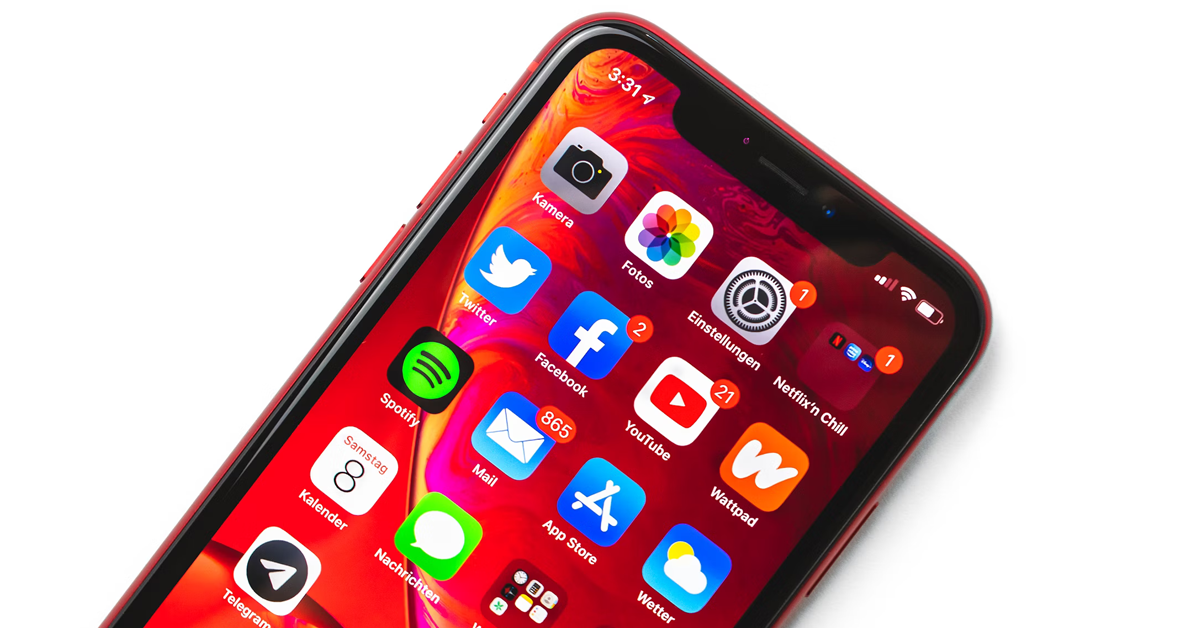
Despite bipartisan support, a bill aimed at protecting children from the “addictive” nature of social media still faces one major hurdle: technological development.
On Monday, Feb. 10, Attorney General William Tong led a news briefing about the proposed House Bill 6857 (HB6857), or “An Act Concerning the Attorney General’s Recommendations Regarding Social Media and Minors.”
At the news briefing, and in his testimony at a public hearing that immediately followed it, Tong spoke about the dangers that social media may pose for kids and teenagers: screen addictions and exposing them to dangerous content, including videos about self harm and eating disorders.
“The algorithms, the machine learning, which is designed to analyze what you’re looking at and then feed you more information. The machine learns what you want to see and what you like and what you’re interested in,” Tong said. “That is [a] powerful device to get you engaged and addicted to the platform, because it feeds you exactly what you want.”
If the law is passed as it is currently written, it would ban social media platforms from recommending, selecting or prioritizing media based on information from the user’s phone, unless that platform can guarantee that a user is either an adult, or a minor who has permission from their parents or guardians to use the platform. However, social media platforms could recommend content based on what a person views or does while on the platform.
On top of this, when a minor uses social media, there would be a default setting that would block them from using a platform between midnight and six a.m. and would limit their use to only one hour a day.
“There’s not absolute bar in this bill,” Tong said. “If an individual parent decides that they want their kid to have access to algorithms, that they can handle it… they can do that, but they have to affirmatively make that decision… it can’t just be some simple click through, it has to be some reasonable verification that the parent made that decision.”
Implementation, however, would not be so straight forward. Social media platforms like Facebook, Instagram and TikTok already have policies in place that prevent minors from using their platforms.
“You’re not supposed to be online, on a social media platform, if you’re under 13, but we know from Instagram’s own data that there are millions of kids under 13, including influencers under 13, on their platforms,” Tong said.
Social media platforms are not the only companies that are accused of lax age restriction enforcement. Nineteen states have passed age verification laws that punish websites or organizations that expose kids to pornography.
Recently, a judge in Tennessee blocked the enforcement of parts of a state law that required pornography websites to verify a viewer’s age by having the user provide photo identification or transactional data. The Free Speech Coalition and other plaintiffs in the lawsuit claim that the law places too much of a burden on adults and restricts their freedom of speech. The law is still under review in court.
There is a stipulation in the HB6857 that the requirements the state impose need to be “commercially feasible,” but Tong is not sure what that would look like.
“I’m not a technologist or a computer scientist,” Tong said at the hearing. “It’s up to these companies, which make trillions of dollars every year off of all of us to figure out how to effectively age gate, verify the age of young people, and to verify parent consent. We know that just putting a page up that says, ‘Are you 18 or not?’ and clicking ‘Yes’ or ‘No’ doesn’t do it. It’s not enough.”
In 2023, Tong joined a lawsuit with 42 other attorney generals in the country against Meta. The lawsuit alleges that Meta deliberately created and implemented features on Instagram and other platforms to get teenagers and children addicted to them.



Meanwhile, most of us self-medicate in some form or another (besides caffeine), albeit it’s more or less ‘under control’. And there are various forms of self-medicating, from the relatively mild to the dangerously extreme, that include non-intoxicant-consumption habits, like social media overuse, chronic shopping/buying, gambling, or over-eating (including highly sugar-saturated products).
.
If such self-medicating forms are anything like drug intoxication or addiction, it should follow that: the greater the induced euphoria or escape one attains from it, the more one wants to repeat the experience; and the more intolerable one finds their non-self-medicating reality, the more pleasurable that escape will likely be perceived. In other words: the greater one’s mental pain or trauma while not self-medicating, the greater the need for escape from one’s reality, thus the more addictive the euphoric escape-form will likely be.
.
With food, the vast majority of obese people who considerably over-eat likely do so to mask mental pain or even PTSD symptoms. I utilized that method myself during much of my pre-teen years, and even later in life after ceasing my (ab)use of THC or alcohol. Though I don’t take it lightly, it’s possible that someday I could instead return to over-eating.