

Seven Connecticut universities have campus speech policies that restrict free speech in some aspect, according to a recent report released by the Foundation for Individual Rights and Expression (FIRE).
FIRE, a free speech advocacy organization, recently released their 2025 report spotlighting speech codes on college campuses. While the number of schools earning “red light” scores, meaning they have at least one policy that substantially restricts free speech, declined from the previous year, none of the Connecticut schools included in the report improved their 2024 rating.
Connecticut College received a red light rating, meaning the school “maintains at least one policy that both clearly and substantially restricts freedom of speech or bars public access to its speech-related policies by requiring a university login and password for access.”
While the school received a green rating for its commitment to free expression, it received a red speech code rating because its student policies are password-protected and require students to log in using their university credentials to view them.
Central Connecticut State University (CCSU), Southern Connecticut State University (SCSU), the University of Connecticut (UConn), Yale University, Trinity College, and Wesleyan University all received a yellow light rating.
According to the report, the yell0w light rating means a school “maintains policies that could too easily be applied to suppress protected speech or maintains policies that, while clearly restricting freedom of speech, restrict relatively narrow categories of speech.”
CCSU received a yellow light rating in part for language in its student handbook that asks students to sign a pledge stating it is their “responsibility to help build a community that fosters mutual respect and a safe environment for all human beings” and their “moral obligation to behave in ways that contribute to a civil campus environment.”
According to FIRE, while universities can “encourage students to live up to aspirational standards such as respect and civility,” they cannot require them to do so. Language that suggests students are expected to demonstrate those values and can be punished for not doing so violates the First Amendment.
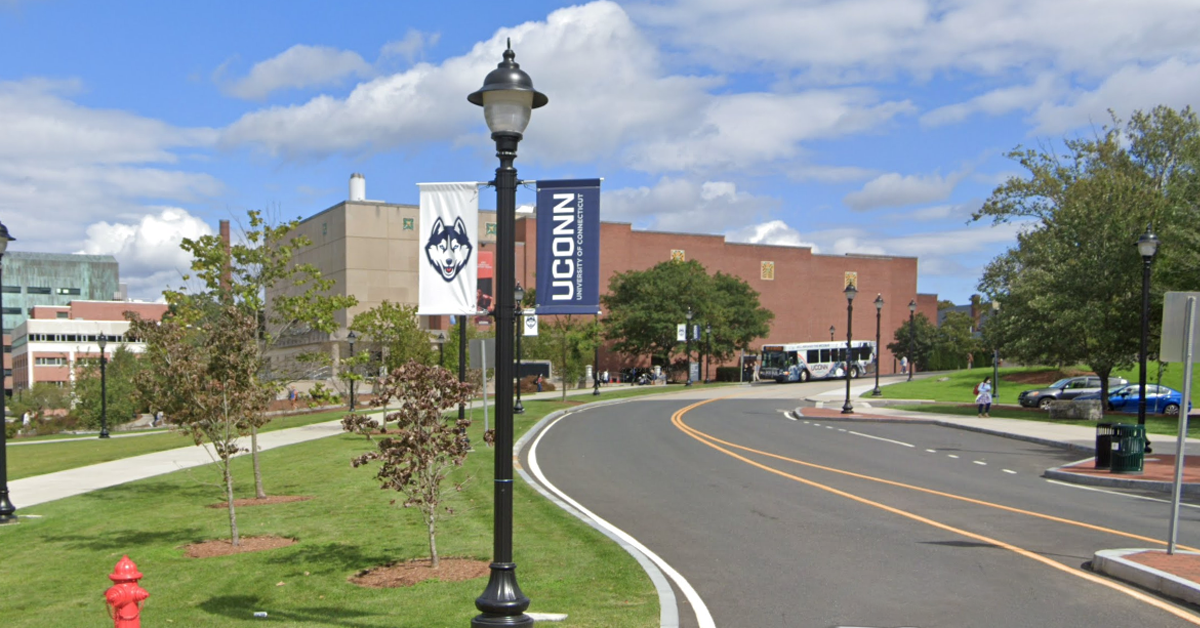
UConn received a yellow light rating in part because of its policies on bias and hate speech.
UConn’s policies state that bias-related incidents, defined as conduct, speech, or expression that targets an individual based on immutable characteristics, “are not tolerated” and “individuals who are victims of bias related incidents may be protected through the Student Code and Connecticut laws related to discrimination, harassment or intimidation based on bigotry or bias.”
Even in cases where UConn’s student code doesn’t apply, the school will “still consider appropriate educational remedies,” which it says are “not designated to be punitive, but rather seek to explore the adverse impact of bias-related actions upon the values of the UConn community.” The school’s policies also state that bias incidents may “indicate a need for education.”
Bias reporting policies are often at odds with the First Amendment. So-called “hate speech” or other kinds of speech that may be offensive is often protected speech and policies that encourage reporting offensive speech can not only lead to investigations into protected speech but also chill free speech.
According to FIRE, anti-bias policies “often broadly define bias by including expression that would be protected under the First Amendment when standing alone, like a single ‘degrading’ joke.”
UConn’s policy defines bias as anything that “negatively targets, intimidates, or threatens” an individual or group do to characteristics like race, gender, or sexual orientation. The policy also specifically states that this definition includes “graffiti or images that harass or intimidate individuals or groups” based on those characteristics.
“University policies on bias often state the institution will investigate or even punish bias, without tying that term to unlawful behavior, such as harassment or discrimination. Investigation or punishment of biased speech serves to chill expression on campus.” FIRE notes.
They further state that vague consequences for violating anti-bias policies often include “vague consequences” like educational projects or meeting with administrators that violate students’ freedom of conscience.



UConn, in the past, even had a policy that prohibited “inappropriate laughter”. The policy was basically laughed out of existence.
My bias about the so-called educational standards at UCONN has unfortunately been reinforced by the use of ‘do’ for the word ‘due’ in their quote.
What about Quinnipiac censoring students against any criticism of Israel and/or the Democratic Party?