

“TIL Connecticut has some claim for pizza making, doubt I’ll ever make it there in my lifetime so call me when your pizza ever leaves your state, unlike all the others you just trashed.”
So reads a message Connecticut’s Office of Statewide Marketing & Tourism (tourism office) received on a taxpayer-funded website telling visitors it is “time to face reality” about Connecticut being the “pizza capital of the USA.”
The website was part of a larger marketing campaign to boost Connecticut tourism by claiming to have superior pizza to New York, New Jersey, and Detroit and was intended to generate awareness and engagement.
The campaign has been referred to as “Rage Bait,” and documents Inside Investigator obtained through the Freedom of Information Act (FOIA) confirm that’s the name given to the campaign by tourism office officials as well. Invoices for various campaign deliverables, including the www.betterpizzainct.com website and phone number soliciting angry messages from outraged residents of other areas famous for pizza, list the project as the “Rage Bait Project.”
According to government officials, it worked. The state has touted the success of the campaign, boasting an $11 return on investment through “measurable, incremental” tourism revenues for every $1 spent as part of the campaign and shifting the nation’s perspective of Connecticut from a “drive-through state.” Recently, the pizza campaign won the state and contracted marketing firm Adams & Knight an award from trade magazine PRWeek.
But while the campaign’s financial returns have generated many glowing headlines from media and state officials, this investigation offers a look at previously unpublished information on what it cost taxpayers, internal communications, and other behind-the-scenes details.
Read tourism office marketing campaign documents Inside Investigator obtained here.

Shifting Slogans
Beginning in October 2023 with the launch of the “Make It Here” campaign, Connecticut’s tourism office has launched several campaigns that depart from traditional marketing efforts. Focused on generating earned media, many of these efforts have taken an aggressive stand in positioning Connecticut against its regional neighbors. Others have focused on creating buzzworthy content designed to go viral on social media, sometimes by directly collaborating with influencers.
In October 2023, Gov. Ned Lamont announced the Make It Here campaign and slogan, a new marketing campaign to replace “Still Revolutionary,” the marketing slogan in effect between 2012 and 2019.
The slogan, which hearkened to Connecticut’s role in the Revolutionary and Industrial Wars, had fallen out of favor with marketing groups by the time it was abandoned by the state. Despite the seven-year run, it was the tenth marketing slogan the state had adopted since the 1980s.
Make It Here adopted an entirely different marketing strategy. Unlike Still Revolutionary, where emphasis was placed on traditional manufacturing, Make It Here was designed to appeal to business and culture in the social media era.
The campaign “highlights the heart and soul of Connecticut’s maker, creator, innovator, and entrepreneur identity with video content sharing the stories of state residents, business owners, and workers.” a press release from Lamont’s office announced when it was launched.
The same press release revealed polling that found only half of Connecticut residents were proud of the state, and only 21 percent would recommend it to others.
The campaign included experiential marketing and public contests, new at the time but something the tourism office has since used widely to bolster the social appeal and reach of its marketing.
Since the debut of Make It Here, the tourism office has unveiled a Christmas movie trail and new signs at the state’s border, launched their aggressive pizza marketing campaign, and created a social media influencer collaboration portal.
All of those campaigns have heavily relied on earned media, largely driven by social content, either through direct posts or events that lend themselves to creating social content.
At the center of them is Rage Bait, by far the most comprehensive campaign the tourism office has launched to date.
But its tone, which has generated earned media by welcoming controversy, was preceded by the rollout of new highway signs welcoming people into the state of Connecticut.

Welcome to CT Signs
New signs installed along I-95, I-84, I-395, and U.S. Route 6 welcoming residents and travelers into the state made headlines when state officials awarded Connecticut several superlatives that took aim at neighboring states. A sign along the New York border proclaimed Connecticut the pizza capital of the United States. Another sign along the border of Rhode Island, also home to a naval base, proclaimed Connecticut the submarine capital of the world. A third sign inbound into Connecticut from Massachusetts—home of the Basketball Hall of Fame—proclaimed Connecticut the basketball capital of the world.
The signs were intended to be provocative, and neighboring states took the bait.
“These updated signs reflect our state pride, showcasing some of the best of what we do in Connecticut. They’re a fun way to greet visitors entering our state.” Lamont’s X account posted in part on September 4, 2024.
“Subtweeting Massachusetts like this is crazy.” Massachusetts lieutenant governor Kim Driscoll’s account posted in response.
“Governor, with all due respect, we have the Basketball Hall of Fame AND the reigning NBA champions.” the Massachusetts Democratic Party’s account also posted.
Massachusetts Gov. Maura Healey shared a graffitied version of the basketball sign, reclaiming her state’s claim to the title of basketball capital of the world.
New Jersey Gov. Phil Murphy wrote on X, “You’re not even the pizza capital of the tri-state area.”
But these reactions—and others from state officials, media, and members of the public—served their purpose: the signs were covered in news stories and became a topic of conversation on social media and in serious political conversations. Late night talk show host Stephen Colbert even took a shot at the signs during a monologue.
But not all outraged responses were driven by injured state pride: Connecticut residents also took to social media to complain about taxpayer money being spent on the signs, particularly while Connecticut’s energy prices are among the highest in the nation.
The signs did have a significant price tag attached, not just for the physical signs themselves but for the traffic protection required while the signs were installed.
According to a September 16, 2024, payment estimate from the Department of Transportation (DOT), initial estimates for the project exceeded $460,000. Eighty percent of the project was funded using federal tax dollars.
Just under $253,000 was approved for the signs themselves. Removal of the old signs was just under $162,000. Another $100,000 was approved for a construction field office.
But traffic protection was the project’s biggest expense: just over $365,000 was approved.
According to documents Inside Investigator obtained through FOIA, the signs were also not immediately installed after they were completed.
DOT officials initially projected the new signs would be unveiled in September 2024. But in early August, DOT communications director Josh Morgan informed members of the governor’s office staff that the signs had been completed earlier than expected and could be installed within the next few weeks.
“I know we want to do the presser before installing them, so please keep us posted on availability.” Morgan wrote in an August 6, 2024, email.
David Bednarz from the governor’s office replied that they were rethinking doing a press conference and might do a social media hit instead.
But after speaking with the tourism office, the Lamont’s staff changed their mind.
“I spoke with [tourism office chief marketing officer] Anthony Anthony this morning, and he suggested we turn this into a press conference with the aim of promoting state pride and bringing in some special guests to elevate the occasion.” Mellaney Castro, director of communications for strategic engagement in the governor’s office, wrote in an August 9 email.
The signs were completed and ready for installation on August 13.
“Contractor was set to install and bag these starting on Monday, but we are asking them to hold off until we get closer to an event date. Is mid-September preferred for [the governor’s office] or can it be moved up?” Morgan wrote in an August 13 email.
After an August 28 date was set for the press conference, the signs were installed, and a bag was put over them.
Emails also revealed that Lamont’s post on X debuting the new signs was modelled after a similar post made by Pennsylvania Gov. Josh Shapiro—at the suggestion of DOT.
“Below is what Gov Shapiro recently did. Given how much work our sign shop staff have put in to the development of these, I would welcome if OTG wants to do the press event at our sign shop. They do a great job; they also did most of the signage during COVID, and any time there is a need from DEEP, State Police, DMV, etc. And it is pretty cool to see how they make signs.” DOT Commissioner Garrett Eucalitto wrote in a July 26, 2024, email sent to Anthony and members of the governor’s office staff.
“This is awesome, Commissioner. I’m aligned with your plan to do it at DOT as long as it works for [the governor’s office.]” Anthony responded.
On July 23, 2024, Shapiro’s X account posted, “If you’ve driven into Pennsylvania recently, you might’ve noticed a few new signs welcoming you here. We’re letting freedom ring here in the birthplace of our democracy — and the amazing women and men of @PennDOTNews are helping us do it.” It also included a video showing Shapiro touring the sign shop.
Language in Lamont’s X post announcing the signs was markedly similar. “We’ve updated the signs that greet visitors as they enter our state.” the account posted.
A few months later, the tourism office and other state offices debuted the pizza campaign.

Pizza Pizza
Elements of the campaign included:
- The Connecticut Pizza Trail, a list of 100 pizzerias across the state. Public votes determined who made the list.
- The #CTByThePie social media contest. Two winners were selected to tour pizzerias on a DATTCO bus wrapped with ads promoting Connecticut as the pizza capital to celebrate the launch of the pizza trail.
- A vanity license plate proclaiming Connecticut the pizza state
- Featuring Connecticut pizza at the Connecticut Building at the Big E
- The creation of a cartoon featuring “Charlie, the official slice of the Pizza Capital of the U.S.”
- Collaborations with social media creators, including the New Haven Pizza Club, including:
- A piece of installation art in the shape of Connecticut made of Welcome to CT signs proclaiming the state the pizza capital
- The auctioning of three pizza-themed Nike Air Jordan 1s
And then there was Rage Bait. This included elements of the pizza campaign that gained the most media attention, namely billboards and ads targeted at rival cities known for their pizza culture, proclaiming Connecticut the pizza capital of the world.
Like the Welcome to Connecticut signs, the point was to be provocative—and generate social media content the tourism office could use to advertise and generate more attention.
References to Connecticut as the “pizza capital” began appearing on the tourism’s office social media in February 2025 around National Pizza Day.
Soon after, Comptroller Sean Scanlon released a “Special Examination on Pizza” that quantified the “impact of pizza” on the state’s economy. According to the report Connecticut is ranked 23rd for the number of pizza restaurants in the state but first for the number of restaurants per 10,000 people and has the highest percentage of either independent or family-owned restaurants.
“Using Average Unit Volumes (AUVs), it’s estimated that Connecticut’s pizza restaurants generate around $600 million in annual sales, contributing to an impressive $3.5 billion in overall economic activity. Along with pizza sales, the state collects $45.66 million in tax revenue.” the comptroller’s report stated. It also found that New Haven’s coal-fired pizza draws over 2 million visitors annually, generating $100 million.
In early July 2025, the tourism office, which had begun advertising other elements of the pizza campaign, including the state’s pizza capital trail, began posting the rage bait social content.
On July 10, the tourism office posted a video accompanying the audio of a voicemail a New Yorker left on the state’s pizza hotline.
“Us: “We’re the Pizza Capital of the US.”
New Yorker: [Has a full meltdown and leaves a voicemail from a walk up building fire escape]
This is just one of hundreds of unhinged messages we got. It only gets saucier from here.
Buckle up. The food fight has only just begun.” the caption accompanying the video reads.
Another similar video included a caption that reads in part “This New Yorker didn’t have time for us, but still found the time to call and leave a message…make it make sense.”
On July 17, the tourism office posted “This is Not AI” images to the Visit Connecticut Facebook and Instagram pages.
“Nope, it’s not AI. These are real human responses to our pizza billboards
One called it a “flimsy disk,” then another called it a “sexy slice”
On[e] hoped we’d die… then apologized the next day
And one called our pizza a Mick Jagger bootleg (??)
NYC, we hear you loud and clear! Keep it coming. We’ll be here enjoying our apizza.” The caption on both posts read.
Other ideas floated by Anthony, including the “choose your fighter” posts and man on the street type interviews were also posted on the tourism office’s social posts.
Despite acknowledging that the point of the tourism office’s campaign was designed to intentionally solicit an aggressive response from out of staters (“there’s one thing we’re good at, it’s stirring the pot (and making the best apizza in the country)” a caption on another Instagram post read), many of the tourism’s office social posts adopted an attitude of incredulity at the emotion being directed at them. And that, too, was the point.
“The term [Rage Bait] referenced informal internal discussions about developing a campaign concept that would attract attention and encourage public sentiment.” Morgan Nyerick, the tourism office’s creative director, told Inside Investigator in response to emailed questions. “The campaign was designed to tap into strong consumer opinions around pizza and generate conversations in a crowded media environment.”
Nyerick added that the campaign resulted in “significant media coverage and measurable increases in awareness and visitation.”
According to emails obtained by Inside Investigator, then-chief marketing officer Anthony Anthony’s proposals for social media posts from the campaign included a “Hot Takes Hotline” featuring “themed voicemails each with title cars featuring 3-5 submissions overtop of pizza visuals,” a “You Can’t Make This Up” montage of the “most outrageous and passionate voicemails” using theme music from Curb Your Enthusiasm, Instagram carousel posts with “Screenshots of the Week” featuring the best or funniest texts, a recurring “Pizza Feud Leaderboard” post with the top “States Talking Trash” messages, positive voicemails from “CT Fanboys/Girls” who lived in other states, man on the street style reaction videos of people on Wooster Street reacting to “nasty voicemails” or reading them out loud, a “Choose Your Fighter Duel” post that asked followers to vote on messages that had “wildly different takes,” interactive pizza bingo based on messages the state received, and “This is not AI,” which Anthony suggested could highlight “especially unhinged, poetic, or heartfelt messages with the caption: ‘A real human said this.’”
Emails from the tourism office Inside Investigator obtained through FOIA also indicate they considered comments left on promoted posts running on Meta platforms as a source of content for Rage Bait posts.
Most of the Rage Bait campaign elements were contracted to marketing firm Adams & Knight.
Adams & Knight is one of several dozen companies that are part of a multi-agency state contract to provide media, marketing and public relations services through August 31, 2027.
Under the terms of the contract, Adams & Knight and other contractors provide consultant and management for multi-media public relations campaigns that may include the development of multi-media campaign and identifying project goals, market analysis, and multi-media advertisement placement or outreach.
Adams & Knight staff are paid $165 an hour for all the services they provide, ranging from accounting to production of various media. Maximum hourly rates for services outlined in the contract range from $515 per hour for account directors to $205 per hour for a variety of services, including social media strategy, public relations support, and web maintenance.
Outreach to so-called “ethnicity communities” is billed at different hourly rates. Under the multi-vendor contract, multicultural marketing outreach targets one or more audiences of a specific ethnicity and typically “takes advantage of the ethnic group’s different cultural referents—such as language, traditions, celebrations, religion and any other concepts—to communicate or persuade that audience.”
Italians are among the list of ethnicity communities state government does outreach to. For all ethnicities, the maximum hourly rate is $200. Adams & Knight’s hourly rate is still $165.
The contract for services provided by Adams & Knight that was in effect from 2020 through 2024 had an estimated $20 million value.
According to data from Open Checkbook, Adams & Knight has received just over $40 million from the state since fiscal year 2014. While the company does contracting work for agencies other than DECD, the majority of that revenue—$23.4 million—comes from marketing services the company provided the state. Just under $19 million came from the Tourism Fund.
The state’s payments to Adams & Knight have fluctuated over the years, but last year the state paid the company $5.83 million, a 167 percent increase from the previous year. Roughly $2.8 million came from the Tourism Fund.
To date in fiscal year 2026, Adams & Knight has received $3.8 million, with roughly $2 million coming from the marketing fund.
In April 2025, an Adams & Knight employee provided Anthony with an estimate for the phone, including:
- Purchasing 1-844-CT-PIZZA for six months at a cost of $2,400
- An estimated $3,000 for calls at a cost of 15 cents per minute
- Purchasing 100CTPIZZA.com and 1844CTPIZZA.com for $50
- Voicemail for six months for $600
- Voicemail recordings limited to 30 seconds per message
The $8,500 estimate for the website included:
- The build and design of a “very simple one-page landing page”
- A page with a comment field to populate a database that would be exported as a spreadsheet and “at end of program and on periodic demand not to exceed twice a month”
It also noted that, while the page was not intended to look like the tourism office’s website, it would be hosted on the same site, which would have the benefit of boosting CTVisit traffic and not incurring additional hosting costs.
The email noted the estimates were based on ”generous traffic.”
“We believe this to be a safe estimate, but if actuals come in higher, we have high class problems.” Felicia Lindau of Adams & Knight wrote.
The tourism office signed a $14,550 contract with Adams & Knight for costs associated with the pizza website and voicemail, including: the cost of the domain, website design and development, setting up the voicemail service, message capture and transcription, and passthrough costs of voicemail service fees. According to a purchase request form, the costs, which were paid out of the tourism fund, covered early June through mid-July.
iProspect, another marketing firm that is part of the state’s current multi-agency marketing contract, also provided deliverables for the state’s spring/summer 2025 marketing campaign, running from April 1 to August 31.
In total, the contract was for just under $2 million, including media spends and commissions. The contract included:
- Digital out-of-home (DOOH) in-flight videos on JetBlue flights
- DOOH digital billboard videos
- Digital video ads at LiveNation concerts in New York City, Boston, and in Connecticut
- New York City subway liveboards and pizza billboards
- CTV and YouTube online videos
- Paid social media posts and videos on platforms like TikTok and Instagram
- Online advertising services, like promoted posts and Google Demand Gen
An invoice paid to iProspect by DECD shows the pizza billboards alone cost just over $188,000—roughly $178,000 for the media assets and $9,800 in commission.
Other elements of the campaign were handled in-house by the tourism office.
In total, the pizza website generated about 240 comment submissions according to documents turned over to Inside Investigator. Roughly a third of comments left came from Connecticut residents either cheering the campaign or the state’s pizza. Another third of comments were left without any identifying information about where the commenter was located but were left by a mix of enraged out-of-staters and enthusiastic Connecticut residents. 28 comments were left by New Yorkers.
The tourism office also shared approximately 70 voicemails left on its phone number.
Adams & Knight are also listed as the tourism office’s PR and communications contacts on the state’s website. The CT Visit website lists PR specialist Caci Cosenzi as the press contact for the tourism office. A webpage for media and press lists additional Adams & Knight personnel as contacts: Michelle Bonner for public relations and Kevin Renwick for paid media and advertising.
But the contact method listed for all three individuals is an Adams & Knight email address rather than a state government email address. That’s potentially an issue because emails sent to and from a private email address are not capturable under FOIA, as DECD noted in regards to a records request Inside Investigator submitted for Bonner’s email in December 2024.
Records produced in response to that request captured only emails in which Bonner interacted with DECD and tourism office employees with a ct.gov email address or copies of press releases, not any emails where any of the Adams & Knight individuals identified as tourism office contacts on their website responded to emails from private individuals in a capacity where they were representing DECD.
Embracing AI
Though the use of generative AI has proved controversial—and the tourism office used AI to mock angry messages left by out of staters as part of the Rage Bait campaign—it hasn’t shied away from its use in recent marketing efforts.
While, despite rumors about AI use, Charlie, the state’s pizza mascot, was designed in-house by the tourism marketing office, documents Inside Investigator obtained through FOIA reveal the tourism office did turn to generative AI in early drafts of the pizza campaign.
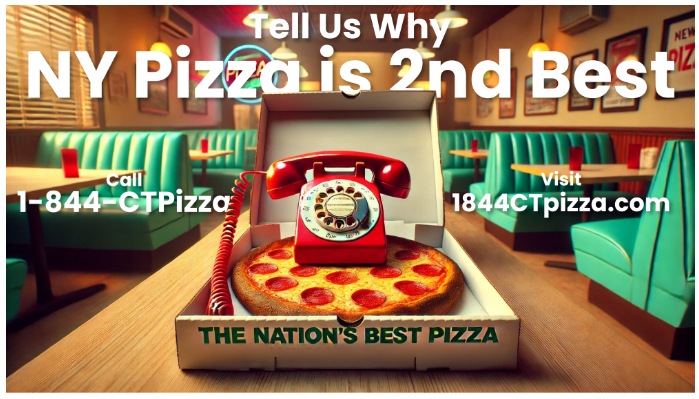
“This is AI driven and it doesn’t have the look of the pizza or the pizzeria just right, but ours will be real and have it squared away. Copy is about what it’ll look like IRL.” Anthony wrote in a April 10, 2025, email to Adams & Knight personnel and tourism office employees following a meeting to discuss Rage Bait.
The tourism office also contemplated using AI on its Make It Here website.
In an email exchange with tourism office personnel, Adams & Knight employee Felicia Landau, provided information about sourcing images for a page on the website that features a “game” drawing connections between Connecticut and famous people and locations. Landau wrote many stock photo services have photos of famous people, but they are restricted for editorial use.
“If you (sic) lawyers can deem the site a “publisher/editorial site”, we could use any of them. But the lawyers would need to be sure your site qualifies.”
Landua suggested the services also have AI-generated images that could be usable.
“Another option—IF your lawyer thinks this is ok—would be for us to create either AI likenesses or illustrations ourselves of each—just to have a consistent look to each.
“Whichever way we proceed, A&K would appreciate a letter from your lawyer that explains the legalities of using these likenesses, and holds A&K harmless.” Landau wrote.
Inside Investigator ran images from the webpage through AI image detectors, which flagged several images, including of Keith Richards and Paul Newman, as likely generated by AI.
By the Numbers
In media stories that mention the pizza campaign, you’d be hard pressed to find one that doesn’t mention its apparent success.
The state’s tourism website boasts that Connecticut’s tourism industry impact is $18.5 billion in traveler spending, bigger than the state of Maine, also known as Vacationland, and includes $1.2 billion in state and local taxes and $2.2 billion in lodging revenue. That last figure, according to the state’s website, is up 7.4 percent from 2022.
The tourism office has repeatedly boasted that, on the back of its pizza marketing campaign, the state has seen an $11 to $1 return on investment. Those numbers, according to Nyerick, are from third-party tourism industry analytics provided Arrivalist, which uses “mobile location data to analyze travel patterns, consumer behavior, and marketing effectiveness.”
According to Nyerick, the $11 to $1 return on investment metric the state has touted “is based on Arrivalist’s analysis of visitation and economic impact associated with campaign-driven travel.”
In early December 2025, the tourism office issued a press release touting the success of the pizza campaign, including the $11 to $1 return on investment, in turning around the nation’s perception of Connecticut.
Among the statistics the press release cited were a 50 percent increase in pizza-related searches on the tourism office’s website and a 37 percent increase in long-distance visitors on the pizza trail.
“This wasn’t a gimmick,” Anthony was quoted as saying in the press release. “It was a strategic proof point. We didn’t ask people to think different about Connecticut—we gave them a reason to. And when they engaged, they found a state that is full of life. We didn’t just grab headlines; we changed minds – and sparked a national conversation about the state that hadn’t existed before.”
Internally, the tourism office also touted the success of the campaign.
On September 27, 2025, Anthony emailed tourism office staff a Muck Rack study that found 89 percent of sources ChatGPT pulls from are from earned media and a blog post from communications firm Edelman about AI sourcing and Google indexing and earned media and social media content reactors.
“This feels like our PR and influence plans are spot on, especially with our limited budget. This is helpful for younger audiences especially who are going to AI first instead of search.” Anthony wrote.
The most recent tourism impact data DECD has is from 2024.
According to the report, conducted by Tourism Economics, 70 million people visited the state in 2024, a 3.1 percent increase from 2023. Visitor spending was estimated at $11.6 billion, a 5.3 percent increase over 2023. While spending increased, the rate of growth was slower than between 2022 and 2023, when visitor spending increased by 5.6 percent.
Food and beverage spending was one of the biggest categories of spending, at roughly $2.42 billion in direct spending. It was outpaced slightly by direct spending on retail, at roughly $2.46 billion.

Up Next: The Creator Collaborative
According to Nyerick, campaign performance data from recent marketing campaigns has shown “exceptionally strong results across all channels.”
But whether the public will see similar campaigns to Rage Bait remains to be seen.
Asked if the tourism office is planning similar marketing campaigns, Nyerick said “The Tourism Office continues to develop a range of marketing initiatives across multiple themes. While future campaigns are still in development, the Office remains focused on strategies that generate strong engagement and visibility.”
Most recently, the tourism office announced the Connecticut Content Creator Collaborative (C4). According to Myerick, the platform, which essentially creates a database of Connecticut-based social media influencers who promote the state and whose services can be purchased, aims to “expand the reach of Connecticut-focused content by enabling local influencers to share content with broader audiences” and to “provide Connecticut businesses with a centralized platform to identify and connect with relevant content creators.
Developing the platform cost around $35,000. Adams & Knight received the contract to develop the platform. Data about its economic and reputational impact is not yet available.
When Inside Investigator reached out to the tourism office with questions about the platform after its debut, there was a backlog of applications that had not been reviewed. While the tourism office provided a document of applications it had received in response to a FOIA request, its system for tracking applications, which used the same code (“blocked”) for applications that had been rejected and those that had not yet been reviewed, made it impossible to judge the size of the backlog. At the time, they had received over 300 applications.
Other documents turned over to FOIA indicated an Adams & Knight employee’s absence led to a backlog of creator sign ups—and questions from creators participating in the Content MADE event the tourism office held to promote C4’s launch who had not received login information ahead of the event. According to the documents, the tourism office did not have administrative access to be able to approve applications prior to early January 2026.
To be eligible to be included, the platform’s guidelines state creators must be active and consistently publish original content on at least one social platform. They must also be open to creating content for external partners and be interested in participating in paid collaborations and campaigns.
Marketing and public relations firms, and businesses that promote their own products are not eligible to be included, which in at least one case resulted in pushback.
The Greater Mystic Chamber of Commerce participated in the tourism office’s Content MADE event, which featured Connecticut businesses and content creators and coincided with the launch of C4, but was rejected because the tourism office decided not to include chambers of commerce.
“For the purpose of this site, we’ve decided not to include chambers – as we really want to focus on content creators whose primary focus is sponsored collaborations with businesses throughout the state. We also have to be judicious in this process and have realized that if we allowed Mystic Chamber to list, we’d have to open it up to chambers statewide – many of whom are not as active on social media as the Mystic Chamber is.” Nyerick wrote in a January 16, 2026, email to the chamber’s president.

Building on Success: Budget Boost?
Costs associated with the Rage Bait campaign exceeded $2 million dollars, accounting for roughly 10 percent of the tourism office’s annual budget in recent years. Given the $11 to $1 return on investment for the wider pizza campaign that the tourism office and other state officials have touted, one might think their budget was not a concern.
But despite the pizza campaign’s success, there are multiple efforts to boost funding to the tourism office.
The state’s marketing budget, along with other Tourism Fund expenditures, has declined in recent years due to the expiration of federal disaster relief funds from the COVID-19 pandemic.
Tourism marketing spending hit a high-water mark with the debut of the Still Revolutionary tagline. The campaign, contracted to a New York marketing firm, spent $27 million over two years. It was the largest investment the state had made in tourism.
After that, tourism funding was cut. Despite receiving a temporary boost due to federal relief to states during the COVID-19 pandemic, funding has again declined in recent years, despite repeated attempts from lawmakers.
In fiscal year 2023, while the state’s marketing budget was $11.7 million, American Rescue Plan Act (ARPA) funding accounted for roughly 65 percent of that. The state’s appropriations were just $4.1 million. Lamont increased that proposal to $4.5 million during the 2023-2024 budget biennium, accounting for roughly a third of the total appropriations allocated to DECD from the Tourism Fund in that year.
More broadly, Tourism Fund appropriations have generally declined since the COVID-era ARPA boost. In fiscal year 2025, appropriations amounted to $18 million. Lamont’s most recent budget proposal makes no adjustments to the $18.7 million appropriated from the Tourism Fund in the most recently enacted budget.
It’s this plateau in funding that has driven the tourism office to turn to a strategy focused on earned media.
“The pizza campaign was one component of a broader earned media strategy and did not represent a shift away from existing marketing efforts. The Tourism Office continues to execute a mix of earned, paid, and owned media strategies, including the “Make It Here” campaign focused on live, work, and play messaging.” Nyerick said. “Given budget constraints, the office has prioritized strategies designed to maximize visibility and engagement through earned media.”
Legislators are also eager to steer more funding towards tourism marketing.
Both in this session and past sessions, a number of proposals have looked to boost Tourism Funding, mostly by earmarking income from the state’s meals tax. This session, legislators have proposed three separate bills that would allocate various levels of funding from the state’s one percent tax on premade meals sold by grocery stores and meals sold by restaurants to the Tourism Fund. One proposal suggests 50 percent of meals tax revenue go to the Tourism Fund. Another proposal does not specify amounts, but would divide meals tax revenue between the Tourism Fund and municipalities where it was collected. A third would deposit an unspecified amount in the Tourism Fund to support “the hospitality, arts, culture and tourism needs of the state and related marketing endeavors.”
Those proposals did not receive a public hearing. However, a similar proposal to dedicate 50 percent of meals tax revenue to the Tourism Fund contained in a larger bill was voted out of the Finance, Revenue, and Bonding Committee.
Increasing funding for tourism marketing has bipartisan support.
“Tourism is not just about Mystic or New Haven pizza,” said Rep. Rutigliano. “As a small business owner, I know firsthand how important tourism and visitor spending are to the success of our local businesses and communities. When we attract events—whether it’s a major conference, a youth sports tournament, a college visit, or a weekend festival—those visitors stay in our hotels, dine in our restaurants, shop in our stores, and explore everything Connecticut has to offer.” Rep. David Rutigliano, R-Trumbull, said in a statement released the day SB 2 had its public hearing.
But with a currently projected General Fund deficit and a recently advanced budget implementer bill that exceeds spending suggested by Gov. Ned Lamont, whether any proposal that diverts funding from the state, particularly to an office that has shown success within the confines of current budgets, will succeed remains to be seen.



Cool, well written article! Things have sure changed since I graduated with a marketing major way back when. What would Don Draper say about this?
Really? Submarine Capital of the World??! Watch 60 minutes March 22 episode on ship/submarine building. The biggest shipyard in Pa delivers 1(!) ship /year (recently purchased by a Korean company!) and we have to PURCHASE submarines from other countries because Mr Murphy’s submarines cant produce fast or good enough to compete. Shameful. But I guess he’s too busy protecting the illegals who he believes is his top priority! This is one of the biggest security threats to our country, but who cares………