

A football coach at Coginchaug High School has filed a lawsuit and a complaint with the Freedom of Information Commission (FOIC) following actions he claims the chair of the Region 13 Board of Education took to discredit him and cause him to lose his job, including making complaints to the school principal and the Department of Children and Families (DCF) claiming he was engaging in inappropriate conduct with football players.
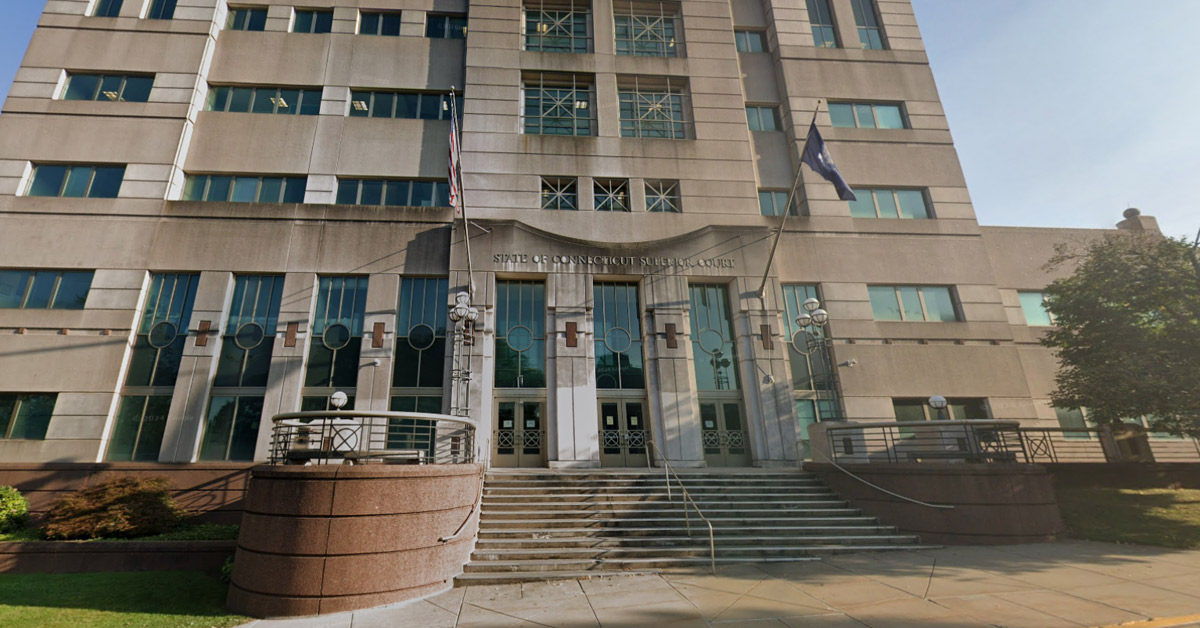
According to a complaint Anthony DeFilio filed in Middletown Superior Court in June, Lindsay Dahlheimer, who was elected to the Board of Education (BOE) for Region 13 in November 2021, has “engaged in improper activities including stalking and monitoring Mr. DeFilio in a predatory manner” and made baseless claims against him since he was hired as the head football coach at Coginchaug High School, Durham‘s regional high school, in February 2023.
Though he claims Dahlheimer sought to have him fired from his coaching position, DeFilio has kept his job. Two investigations, one by the school and one by DCF, found claims against him were baseless.
According to the lawsuit, on November 20, 2024, Dalheimer made complaints to Coginchaug High School’s principal, claiming he was verbally abusive and had physically assaulted players on the football team. The lawsuit says DeFilio was cleared of wrongdoing by a school investigation.
Subsequently, the lawsuit claims Dalheimer made similar allegations to DCF and had her husband corroborate them during an investigation conducted by the agency. The lawsuit states DCF also found the claims to be unsubstantiated.
DeFilio is asking for more than $15,000 in damages, punitive damages, attorney’s fees, and to cover the cost of the lawsuit. The lawsuit says the Dalheimers made the complaints against DeFilio with malice in order to have him either fired or force him into quitting, or “possibly placing him in a position of having to defend against criminal charges.”
On August 18, DeFilio also filed a complaint against Dalheimer and BOE co-chair Robert Moore, alleging the pair violated the Freedom of Information Act (FOIA) by illegally holding an executive session during a July 16 special board meeting where members voted on whether to investigate Dahlheimer.
The meeting agenda for the July 16 BOE meeting lists “discussion of attorney-client privileged communication regarding indemnification of Board members (proposed for executive session)” as an agenda item, as well as discussion and “possible action on request for indemnification” and discussion and “possible action on request for investigation of Board member.” The latter two do not include a request to enter into executive session.
FOIA strictly limits when public agencies can enter into executive session, as well as how this must be noticed and who can attend. Under the law, public agencies can only enter into executive session when they are discussing certain personnel matters such as an employee’s performance or dismissal, strategy or negotiations affecting pending litigation in certain circumstances, public security, discussion of the purchase or sale or property, or discussions affecting information that is exempt from FOIA disclosure.
The law also requires that public agencies declare their reasons for entering into executive session clearly on their agendas. They must also vote by a two-thirds majority in order to enter executive session. Agencies can take up business not listed on the agenda, but only with a two-thirds vote.
FOIA also limits who is allowed to attend executive sessions. Only members of the board and those they’ve invited to present testimony or opinion are allowed to attend, and only for the “period for which their presence is necessary” to do so.
According to DeFilio’s FOIC complaint, during the meeting the board entered into executive session to discuss attorney-client privileged communication and to discuss launching an investigation. They gave attorney-client privilege as the reason for both items.
But DeFilio’s complaint alleges the executive session was illegal because “the agenda did not include a reference to any permitted statutory authority to hold an Executive Session.” Dahlheimer also didn’t state one at the time the board voted to enter executive session, the lawsuit claims. DeFilio also states the executive session was illegal because there is no pending litigation against any of the board members in their official capacity. His lawsuit names Dahlheimer and her husband in their private capacities.
Further, DeFilio’s complaint states there is not statutory authority allowing a public agency to vote on whether to investigate a public official in private.
The BOE’s legal counsel and District Superintendent Dr. Syndney Leggett, who is not a BOE member, attended the executive session, which DeFilio also alleges was improper.
After the executive session, Dalheimer called for a vote to provide herself with indemnity from DeFilio’s lawsuit. Despite the motion not receiving a second, Dahlheimer called again for a second and the motion passed by a split vote.
“Even though the motion passed, the BOE never made (in public at least) a finding that the DeFilio lawsuit had anything to do with Dahlheimer’s conduct as a member of the agency – most likely because Dahlheimer attended the illegal Executive Session, and presided over the item regarding her own indemnification through the Board’s insurance policy.” DeFilio’s complaint states.
The board also voted unanimously to add an agenda item to their next regular meeting to investigate Dahlheimer as a board member.
“Following this special meeting, having secured her own personal benefit from her position as BOE Chair, Dahlheimer resigned.” DeFilio’s complaint states.
Dahlheimer had faced calls to resign from parents in the school district over alleged ‘unethical’ behavior, including comments she supposedly made that disparaged student athletes from another district and defamed parents. Dahlheimer denied the allegations.
The BOE met again on August 13. The agenda listed “Discussion of Investigation of Board Member (proposed for Executive Session)” as an item, and the board entered into executive session to discuss it. Dahlheimer attended along with board members and Leggett. A vote on whether to investigate Dahlheimer following the session failed.
Again, DeFilio’s complaint alleges the executive session was illegal because it did not “reference to any permitted statutory authority” to enter executive session and because there is “no statutory authority permitting a public agency to have an Executive Session regarding whether or not to conduct an investigation of a public official to be held in private.”
The complaint further alleges that Dahlheimer and Leggett’s attendance was a violation of FOIA.
DeFilio is asking the FOIC to find that the BOE violated FOIA by entering into the July 16 and August 13 executive sessions and to direct them to publicly publish “copious content shared and discussed by the BOE in private under the auspices of its illegal Executive Sessions.” DeFilio is also seeking to have BOE members fined $1,000 each and asking that the money be given to a non-profit that promotes freedom of information.
In his lawsuit, DeFilio is currently asking the court to enter a default for Michael Dahlheimer due to his failure to plead. Dahlheimer has objected to the motion. Court dates are currently scheduled through the beginning of October.


