

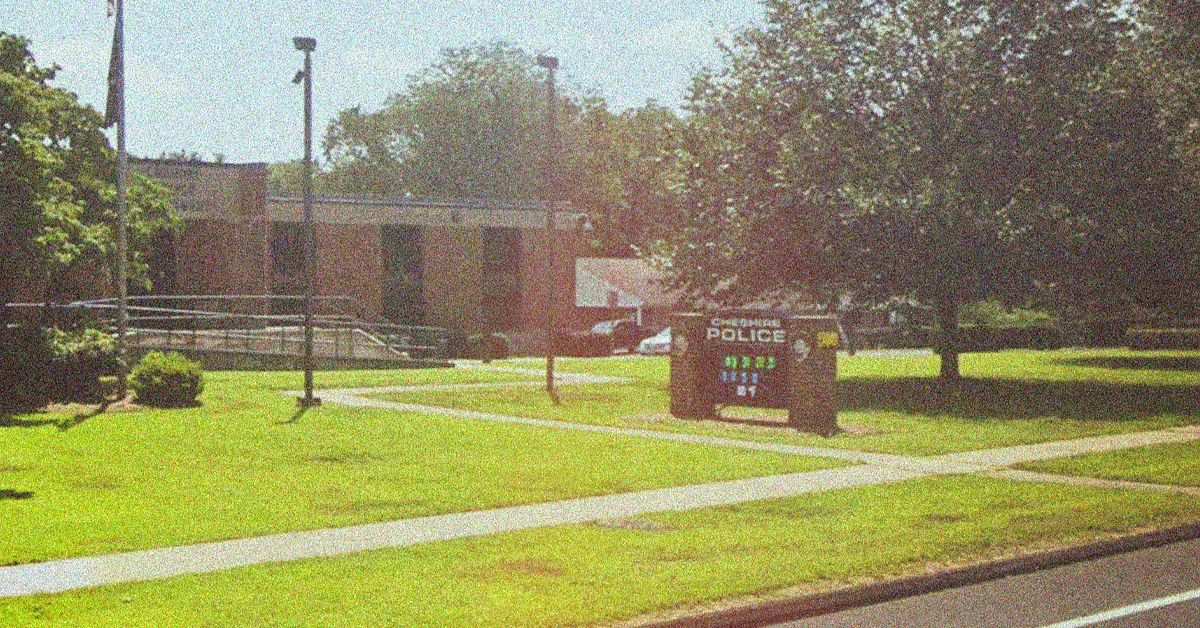
After three years, countless phone calls, and three letters sent by the family of Shane DeJongh, a Cheshire man whose untimely death was ruled a homicide by Connecticut’s Office of the Chief Medical Examiner (OCME), and their lawyer Ken Krayeske, to the Cheshire Police Department and the New Haven District Attorney’s Office has yielded no prosecution and spurred little communiciation, Krayeske went down to Cheshire’s Town Hall last week to plead for greater action on the family’s behalf.
“Mr. De Jongh was the victim of a homicide,” said Krayeske. “It is deeply disconcerting that if the prosecutor’s office lacks information about what happened, the only people feeding the prosecutor’s office information are the Cheshire Police Department, so if there isn’t enough information, it means the investigation was insufficient, and we would ask the Cheshire Police Department to investigate the investigation and determine why, on a homicide, we lack enough information to spur a prosecution.”
DeJongh died on the night of October 5, 2023, allegedly after a physical altercation with Talon Vadasz-Buckhout, the son of his then-fiancée, Natasha Vadasz. When members of DeJongh’s family, most of whom live in California, arrived in Connecticut on Oct. 7, they were originally told that he died of a heart attack. But after a reluctant Natasha slowly fed them more details regarding the severity of the altercation, and as the OCME made them aware of the severity of DeJongh’s injuries, the family grew more and more suspicious that DeJongh’s death was not due to natural causes. Last year, Robyn van Ekelenburg, one of DeJongh’s three sisters, told Inside Investigator that after the funeral home first denied her family the right to see DeJongh’s body, and a coroner from the OCME told her they had “major concerns” with the circumstances surrounding his death, the family “knew then it was a very violent assault.”
The family was finally allowed to see DeJongh’s body on Oct. 9, 2023.
“His face was so distorted and swollen, he looked like an old man,” said Colleen Franzino, DeJongh’s mother. “His whole face was puffy, his neck was puffy.”
“It looked like he didn’t have a neck,” said Van Ekelenburg.
DeJongh’s autopsy reflects his cause of death as being “cardiac arrhythmia following physical altercation with blunt injuries of head and neck complicating hypertensive and atherosclerotic cardiovascular disease,” but the manner of death was ruled “homicide (physical altercation with another)” by the medical examiner. Coroners found DeJongh to have suffered from a subdural hematoma, a type of brain bleed associated with physical trauma, two black eyes, and bruising. Despite these findings, and a November 2023 phone call in which a medical examiner told the family that DeJongh was also found to have had a broken larynx and that he didn’t know how DeJongh could have made it into bed, no charges have ever been filed, and DeJongh’s family has been unable to get a clear answer as to why. To this day, neither the family nor Krayeske can even confirm whether the police ever interviewed Talon during their investigation.
“The whole reason we got an attorney in the first place is because nobody would give us any answers, and kept getting what we felt like was the runaround,” said Van Ekelenburg in a recent call with Inside Investigator. “Initially, they answered our calls and we had one big meeting with them, and that was it. In some capacity, I still feel like we were being gaslit a little bit; for the first six months of things, it seemed like they were trying to downplay it.”
Krayeske has since represented the DeJongh family in a civil suit against Vadasz and Vadasz-Buckhout, which was initially filed in March 2025. Van Ekelenburg told Inside Investigator that she, her mother, and one of her cousins must have called the Cheshire Police and New Haven District Attorney’s Office, the office that ultimately decides whether to press charges and prosecute them in DeJongh’s case, “probably more than” 30 times over the past two and a half years, to no avail. Van Ekelenburg said her mother has also called the Attorney General’s Office and Chief State’s Attorney’s Office on “countless occasions,” and that both she and her mother have also sent them several emails.
“We really kept at it,” said Van Ekelenburg. “We pushed again and pushed again and didn’t hear back from anyone, and it got to the point where we’re like ‘OK it’s not going anywhere,’ and that’s why Ken sent his letters.”
On Feb. 19, 2026, Krayeske sent his first letter via certified mail to Cheshire Police Chief Frederick Jortner Jr., Chief State’s Attorney Patrick Griffin and New Haven State’s Attorney John P. Doyle, Jr. In the letter, he pleads for greater communication and transparency on behalf of DeJongh’s family, and reminds officials of the fact that “the longer it takes for the state to prosecute a case, the more difficult it is to obtain a successful result.”
“In the two years since Shane’s death, the family has learned nothing of the investigation into the homicide from either the Office of the Chief State’s Attorney or from the Cheshire Police Department,” reads Krayeske’s letter. “Having spoken with the Office of the Victim’s Advocate in the New Haven Judicial District, we are told that the Victim’s Advocate can do nothing for the family, including provide information and resources, until an arrest is made. Unfortunately, the DeJongh family has no idea if an arrest will ever be made. The horrible trauma that an unsolved homicide inflicts on grieving parents, siblings and children has only been exacerbated by the lack of information from the appropriate law enforcement agencies about what, if anything, is being done regarding Mr. DeJongh’s untimely death.”
After receiving no response, Krayeske followed up with two more letters on March 26 and May 6.
“We sent you a letter dated February 19, 2026. We heard no response from you,” reads Krayeske’s May 6 letter. “We sent a second letter dated March 26, 2026. We heard no response. To say Shane’s family feels frustrated with law enforcement in this case is an understatement. We beg of you to communicate with us.”
After still receiving no response, Krayeske went down to Cheshire’s Town Hall on June 8 to bring the issue to the attention of the Cheshire Town Council. Inside Investigator was also in attendance. Before he testified during the town council meeting, Krayeske had an impassioned conversation with Chief Jortner, and Cheshire’s Deputy Police Chief, Michael Durkee, in the hallway outside the meeting room. During a phone call after the meeting, Krayeske told Inside Investigator he intended to “address whether or not the town council” could “oversee the police department” and “find out what was wrong with this investigation,” and that he “did not expect to see Chief Jortner.”
“The family retained me,” said Krayeske to Jortner outside the meeting room. “They asked me to reach out to you. I have written you three letters. It would have been nice of you, if, after my second letter, or even after my third letter, to reach out and say, ‘Krayeske, it’s out of my hands, go to Jack [State’s Attorney Doyle].”
“Did I get back to you in email, at some point?” asked Jortner.
“No!” Krayeske replied.
“I’ll check my stuff and get back to you, and if I’m wrong, I’m wrong,” said Jortner. “But the point is, I’m telling you now; there’s nothing I can do. We’ve exhausted, we’ve investigated, everything we have, everything that’s needed!”
Jortner and Durkee repeatedly told Krayeske that the decision to press charges and prosecute a case ultimately falls to the New Haven State’s Attorney’s Office. Krayeske repeatedly asserted that since prosecutors have yet to press charges, it’s reasonable to question whether the investigation done by the Cheshire PD was adequate. Neil Dryfe was Cheshire’s police chief at the time of DeJongh’s death, before becoming Avon’s police chief in July 2025.
“Have you done an investigation, into the investigation your officers did on this case?” asked Krayeske.
“Why would I?” said Jortner. “It has to be adjudicated! It’s been in court since the previous chief; if you want to talk about timelines, it’s been there. I wasn’t a chief at that point, so it falls under a different administration.”
Krayeske then asked Jortner if he was familiar with the details of the case, or if he “personally reviewed the files.”
“I haven’t looked at the case,” said Jortner. “I mean, I know about the case, I have not looked at every single thing.”
Jortner told Krayeske that he was “not trying to avoid” or “dismiss” him.
“I promise you, as soon as the court makes a decision, I can charge him or make an arrest for him on something, or nothing, and we can sit, you can come to my office, and we can talk about it,” said Jortner.
When asked for comment, Jortner told Inside Investigator that DeJongh’s death is “actively being investigated, so therefore it would be inappropriate for me to comment on that.”
On June 9, the very next day, Krayeske received a letter dated June 1 from State’s Attorney Doyle, acknowledging receipt of his previous letters and asserting, the case “is still under review by the New Haven State’s Attorney’s Office and the Cheshire Police Department, which includes meetings that have been ongoing, including one of last week.”
“There are additional investigative steps and analysis that are currently being undertaken,” wrote Doyle. “Once this additional work is completed, I will contact you directly and let you know of any decisions regarding this case.”
Krayeske confirmed that during their conversation, Jortner,” suggested [that] ‘The prosecutor met with us recently,’ he didn’t give me a date.” He also said he was “pretty happy” to see Doyle finally respond. Van Ekelenburg agreed and hoped that “whatever they’re doing at the state is going to lead to a prosecution.”
On June 11, Franzino, Van Ekelenburg’s mother, received an email back from Peter Talbot, Cheshire’s Council Chair.
“The investigation of criminal complaints is not within the purview of the Town Council,” wrote Talbot. “While I certainly have sympathy and empathy for your family’s loss, the Town Council is limited in its ability to make public comments about a matter over which it has no jurisdiction. More importantly, public comment would be inappropriate while the matter remains active/pending. I am satisfied that the Cheshire PD investigation has been thorough, professionally conducted, and subject to ongoing review since October 2023.”
Franzino thanked Talbot for his response, echoed her previously stated concerns surrounding the investigation, asked that police review the investigation into a sexual assault case involving Talon that preceded DeJongh’s death, and shared her hope that council members will “begin asking questions and reviewing the investigation conducted into my son’s unsolved homicide.”
“Seeking accountability and transparency from public agencies should not be viewed as controversial; it is a fundamental responsibility of public officials,” said Franzino. “We are asking that you advocate for an independent review of both Shane’s homicide investigation (and the rape case that preceded it), as well as greater transparency regarding how these investigations were conducted. Our family and the Cheshire community deserve to know that these cases were thoroughly investigated and appropriately reviewed.”
Inside Investigator requested comment from the council, but received no response.
“We’re still impassioned and that’s not going to change,” said Van Ekelenburg. “We’re frustrated, but we’re using that as fuel to pursue justice. We want answers, and we want to know not only what happened, but what the state’s plan is to pursue some justice for Shane.”



Should of hired a better lawyer,that guy is a clown. 🤡