

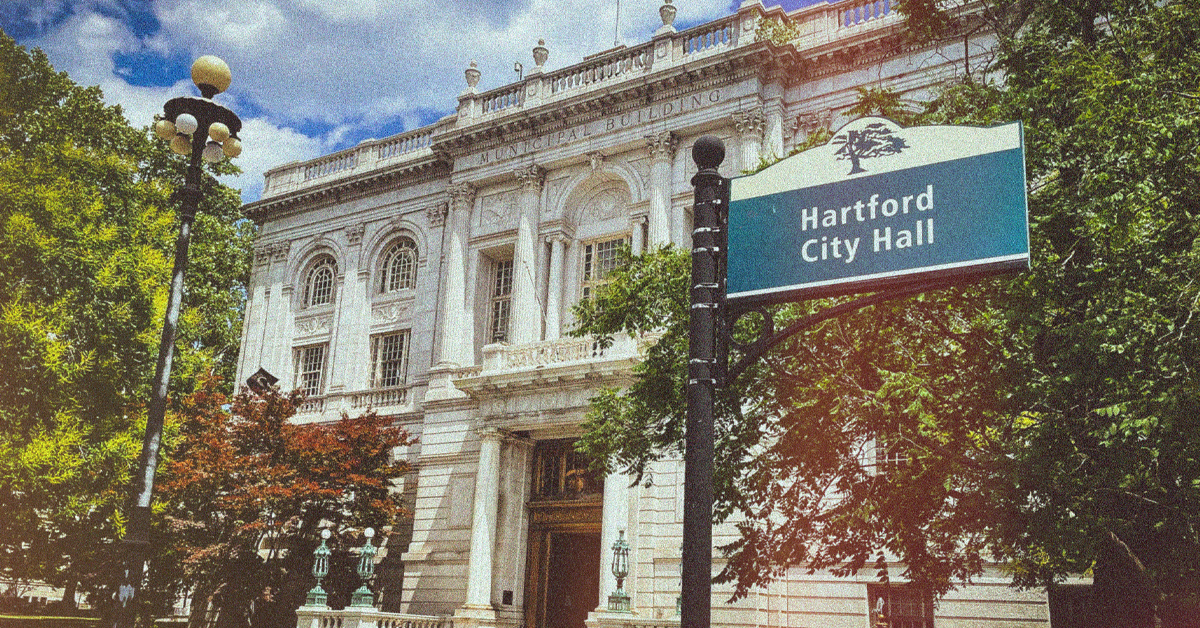
The Hartford-based personal injury law firm Trantolo & Trantolo informed the City of Hartford of their plans to file a lawsuit after Mayor Arunan Arulampalam ordered city police to issue a citation to the firm and filed a grievance with the Statewide Grievance Committee after the firm placed messages stenciled in chalk on the city’s sidewalks.
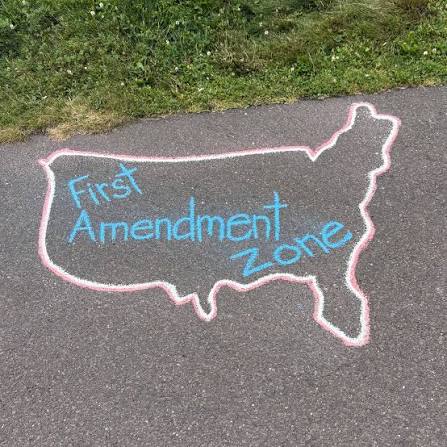
The messages, which included statements warning pedestrians about traffic accidents and road safety and included the firm’s name, were stenciled in chalk on sidewalks throughout Hartford and West Hartford in August and led to ample media coverage. In statements to the media, Arulampalam called the messages “disrespectful” and likened them to “graffiti.”
According to a statement issued by Trantolo & Trantolo at the time, the temporary messages were meant to remind the public about traffic and pedestrian safety: “Harford has a serious road safety problem. That is the story we set out to tell,” the law firm wrote in a social media post. “Our intention was to use an unexpected format to get people to stop, look and think about an issue that affects everyone who drives, walks or rides on Connecticut roads.”
The City of Hartford didn’t see it that way, with police issuing a citation against the firm for violating the city’s ordinance against advertising on public property without a permit, required the firm to remove the messages, and filed a complaint with the Statewide Grievance Committee, which can issue discipline against attorneys.
However, Trantolo & Trantolo are arguing that it was a matter of free speech, that Mayor Arulampalam issued punishment for protected speech that he didn’t like, and the grievance was “retaliatory,” according to the October 26, 2026, letter from free-speech attorney Mario Cerame of Aeton Law Partners to Hartford Corporation Counsel Jonathan Harding that includes an invitation to negotiate to reduce attorney fees.
“The Mayor effected an illegal prior restraint by destroying my clients’ protected speech, illegally retaliated against the speech, and unlawfully commandeered and coopted the Hartford Police Department,” Cerame wrote. “And you personally took part in this unconstitutional conspiracy.”
The letter references “a large post” on Arulamapalam’s political Facebook page, posted shortly after the police issued Trantolo & Trantolo a citation. That post appears to have been removed.
The letter goes on to claim the city’s argument that the stenciling violated city ordinance “was a fig leaf for viewpoint and content-based discrimination.” Cerame also claims the city’s complaint to the Statewide Grievance Committee “doesn’t even identify a rule of professional responsibility.”
Trantolo & Trantolo has also filed a motion to dismiss against the issued citation on similar grounds, claiming “it was wrong for the Mayor to subvert the criminal sanction to advance his agenda, deleting speech on a matter of public concern,” according to the motion to dismiss.
The city’s claim that the stenciled messages were “designed to distract pedestrians” and could cause someone to get hurt is similar to claims made by the Department of Transportation and the Connecticut State Police when, throughout 2025, they ordered anti-Trump protesters to remove protest signs from highway overpasses because state regulations forbid unauthorized signs on the overpasses and it caused a distraction for drivers.
The ACLU, however, filed a federal lawsuit against DOT Commissioner Garrett Eucalitto and Department of Emergency Services and Public Protection Commissioner Ronnell Higgins, challenging the enforcement of those laws and regulations as unconstitutional. The Attorney General’s Office settled the matter by restricting what laws Connecticut State Police could enforce when it came to overpass protests for two years.
According to the letter to Harding, Trantolo & Trantolo faced a similar issue in 1978 when the firm published a quote by John Locke in a Hartford newspaper, and a similar grievance was filed with the Statewide Grievance Committee. Although the grievance was upheld by both the Committee and a trial court, it was eventually reversed by the Connecticut Supreme Court.
Chief Justice John A. Speziale wrote that regardless of whether the message was ideological or commercial, both were protected speech: “Even if the statement is commercial it is entitled to constitutional protection as the plaintiff has asserted no substantial interest in prohibiting such statements.”
As noted in the letters and court motions, the chalk was not permanent and would have disappeared naturally with foot traffic and weather or even a broom-sweeping, although the mayor’s office claimed it cost the city $1,500 for cleanup.
Similar stencils were placed in West Hartford, but the town did not issue a police citation or file a complaint with the Grievance Committee. Rather, they forwarded a clean-up bill to the firm for $742.16.
“The Mayor publicly identified speech he disliked, directed the police to cite its publisher, and defended that decision by attacking the message and the profession of the people who published it. He did not discover an offense by investigating a public danger,” Cerame wrote.
City of Hartford Officials did not immediately respond to a request for comment.