

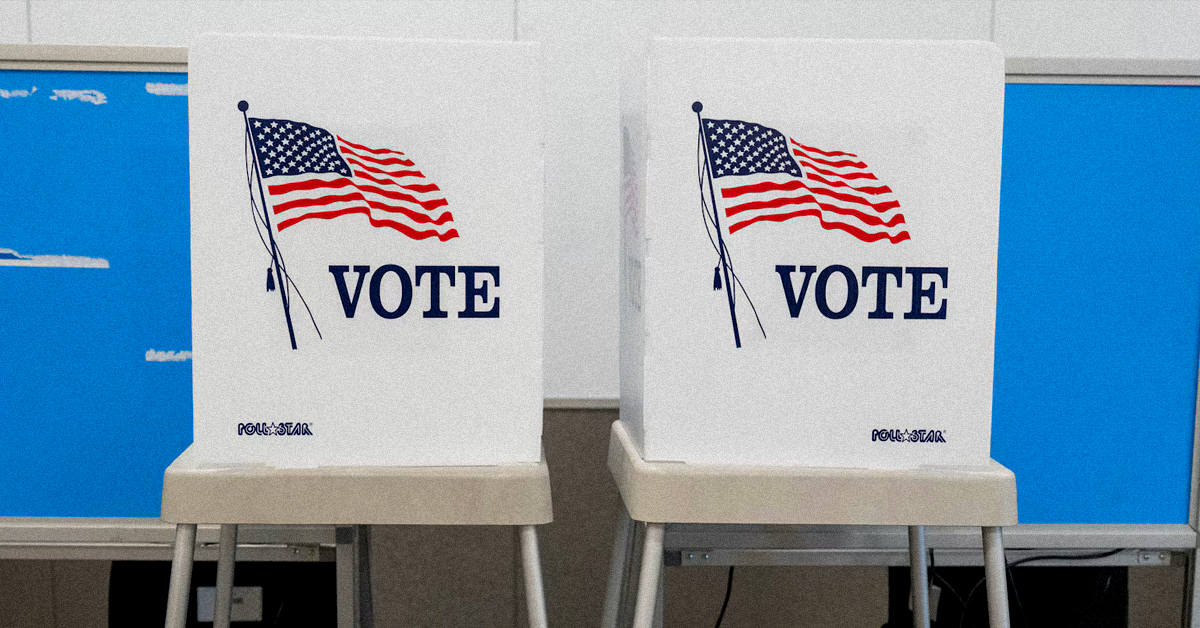
In May, Connecticut’s General Assembly passed HB 5001, which enacted a “250-foot rule” for law enforcement officers at election sites, in an attempt to limit potential ICE interference in state elections. State police officials were perplexed by the bill’s passage and expressed concern that any variety of innocuous acts at election sites could be considered criminal, while State Republicans expressed outrage.
Rep. Greg Howard (R-Stonington), a Stonington Police detective, told News 8 the law treats officers as “second-class citizens.” In an August Facebook post, State Rep. Anne Dauphinais (R-Killingly) criticized the bill as “another example of CT Democrats putting political agendas ahead of common sense.”
“Our officers already face enough challenges recruiting and retaining qualified personnel,” said Dauphinais. “The last thing we need is to make their jobs even harder and create confusion that could put their careers at risk.”
At an Aug. 11 press conference, a clip of which was included in Dauphinais’s post, Gov. Ned Lamont told a reporter that Ronnell Higgins, Commissioner of the Department of Emergency Services and Public Protection (DESPP), would “get some clarity out there,” and “make sure people know, police are also there to keep people safe.”
Last week, Connecticut’s Office of the Secretary of State released a guide on the 250-foot rule, in hopes of addressing officers’ concerns and answering any remaining questions ahead of the November elections. Stephanie Thomas, Secretary of State, said her office has “been working with law enforcement and registrars on this well in advance, so everyone understands their responsibilities.”
The ten-page guide starts off by clarifying the intent of the rule, stating it was “designed to protect voters, election workers, and the public from intimidation or interference at election locations,” while also clarifying that it “does not prevent police from responding to emergencies, performing routine duties that do not interfere with elections, or voting themselves.”
Per the guide, the law prohibits law enforcement officers and “certain other government-authorized personnel” from questioning voters’ registration status, asking them to show ID “unless Connecticut law requires it,” or wearing face coverings for the purpose of concealing their identity instead of medical need, weather conditions, or religious practice. The law applies to all federal, state, and local law enforcement officers, as well as any “officers or agents” authorized by the federal or state government to “use force, search, detain, or arrest people,” as well as any official with the authority “to direct or control those officers or agents.”
The guide dictates that officers can still perform “on-duty activities,” such as routine patrols, traffic enforcement, emergency responses, or investigations within 250 feet of election sites, so long as they “do not interfere” with the election process. Officers are allowed to cast their own ballots while on or off duty, travel freely through 250-foot zones or frequent businesses within them, and, in cases where polling sites are within 250 feet of police facilities, officers will “not need to close or change their operations.”
If an officer does wish to search, detain or arrest a subject, and it is not done in response to an emergency, they must have a judicial warrant to do so, and must provide “at least 24 hours’ advance notice” to the Secretary of State and Attorney General, and may only remain in the area “as long as reasonably necessary to carry out that authorized action.” Officers may perform additional police duties as requested by the Secretary of State or local election moderators.
“The law is intended to protect elections from interference, not disrupt public safety or everyday life,” reads the guide. “Election security and public safety work together. This law is designed to protect both.”
The law applies to officers’ activities at absentee ballot drop boxes, both early and same-day in-person voting locations, same-day registration locations, central ballot-counting locations, and recanvass locations. The guide recommends that anyone who witnesses a voter “being intimidated, blocked from voting, asked for unauthorized identification, or otherwise interfered with at an election location” report it to on-site election officials as well as the Secretary of State’s Office and State Elections Enforcement Commission.
“We are committed to protecting the right to vote in Connecticut,’’ said Higgins. “For more than two years, we have been working closely with the Secretary of the State, local and state law enforcement, the Office of the Attorney General, and municipal leaders to make sure we have a safe and secure Election Day.”