

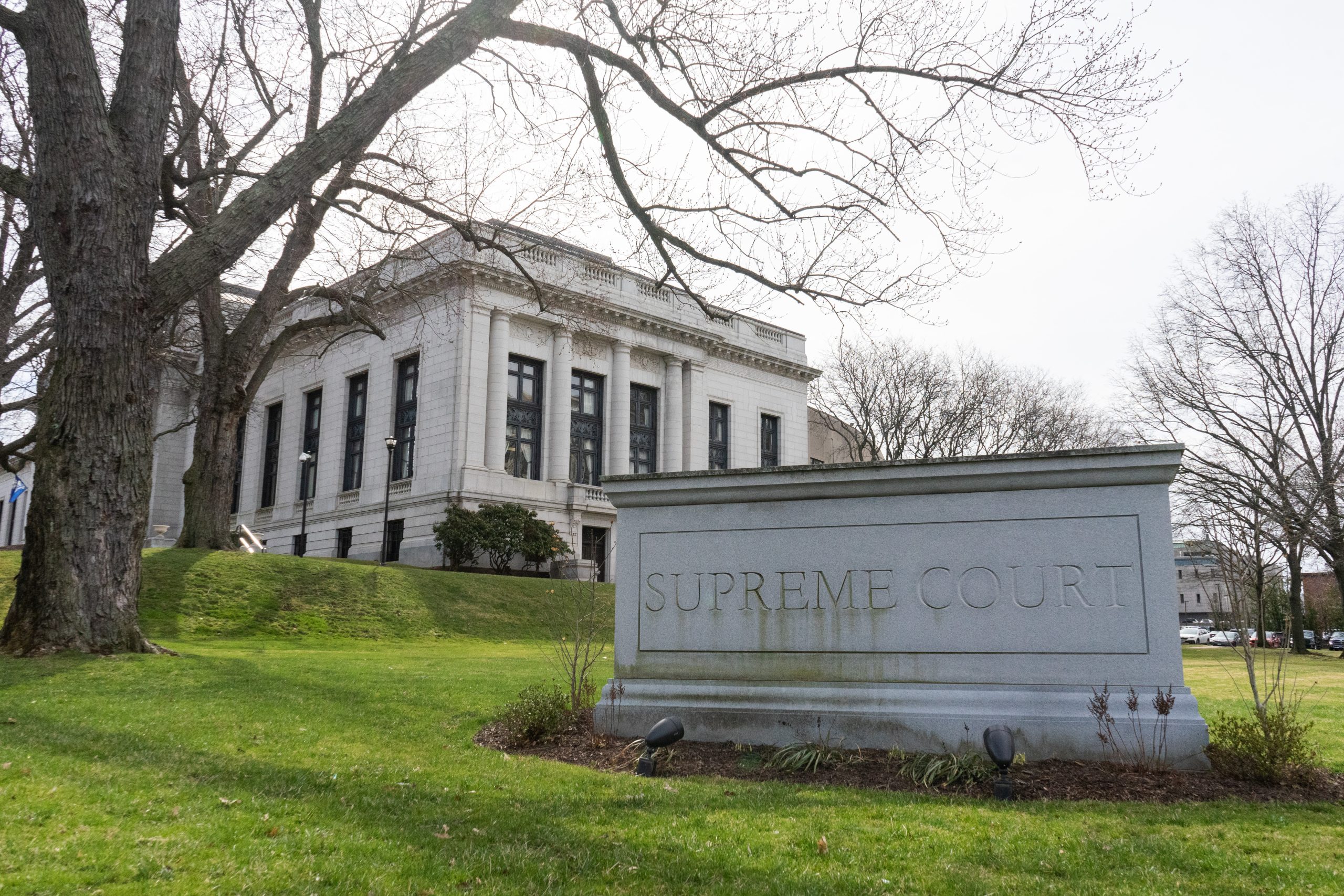
The Connecticut Supreme Court dismissed an appeal from the author of a blog that has been critical of the Hartford Police Department, finding they lacked jurisdiction. The ruling, which was procedural and did not address the case on its merits, means Kevin Brookman will have to turn over electronic devices to Vincent Benvenuto.
Brookman, who authors the We the People blog, was ordered to turn over his laptop hard drive, and the server and mobile phone he used to maintain the blog following a superior court judgment that found Benvenuto, a lieutenant with the Hartford police, had shown probable cause that several commenters on the blog had defamed him and granted a bill of discovery. Brookman was ordered to turn over the devices so the IP addresses of the blog users who had allegedly defamed Benvenuto could be identified.
Benvenuto appealed the order to the supreme court, which ruled that the lower court’s granting of Benvenuto’s bill of discovery was not an appealable final judgment.
In granting the bill of discovery, the trial court ordered Benvenuto and Brookman to “attempt to reach an agreement on the terms of a protective order that adequately preserves the defendant’s interests, and to attempt to agree on a search protocol covering procedures, search terms and dates” so that Brookman’s privacy would be protected. In the event they could not reach an agreement, both parties were to submit “proposed orders regarding the protective order and search protocols.”
This order was at the heart of the supreme court’s ruling.
“Specifically, the trial court’s order that the parties “attempt” to agree meant only that counsel was required to engage in good faith efforts to reach an agreement regarding the terms of the protective order and search protocols and in no way required, contrary to the defendant’s argument, the defendant’s counsel to reveal information that would put at risk the statutory and constitutional rights to anonymity that the defendant sought to protect, as such counsel could decline to reveal any such information if he acted in could faith and could ask the court to decide the open issues if the negotiations were to fail.” the court noted in its ruling in the case.
The court also objected to the timing of Brookman’s appeal, arguing it was premature.
Mario Cerame, who argued Brookman’s case before the court, said that he was worried a delay to the appeal would have hurt Brookman’s case.
“I feel that if we waited to appeal, we were vulnerable to a claim that we missed the applicable appeal period. It’s unfortunate that parties have to make their best guess at the final judgment rule in close cases like this.” Cerame said. He added that they would “perfect the appeal and go forward.”
In not addressing the case on the merits, the court did not decide whether Brookman’s blog is covered by Connecticut’s reporter shield law. The law protects news media from being compelled to identify sources. However, the word “blog” does not appear in the law, leaving the question of whether strictly online newsgathering and journalistic activities are protected by the law, uncertain.
Brookman’s case argued that language in the law which protects an “other transmission system or carrier” would cover the blog. That was disputed by Benvenuto’s lawyer. The question of whether the blog was covered by the state’s reporter shield law was the subject of questions addressed to both sides during oral arguments, but the court ultimately did not address it in its ruling.


