

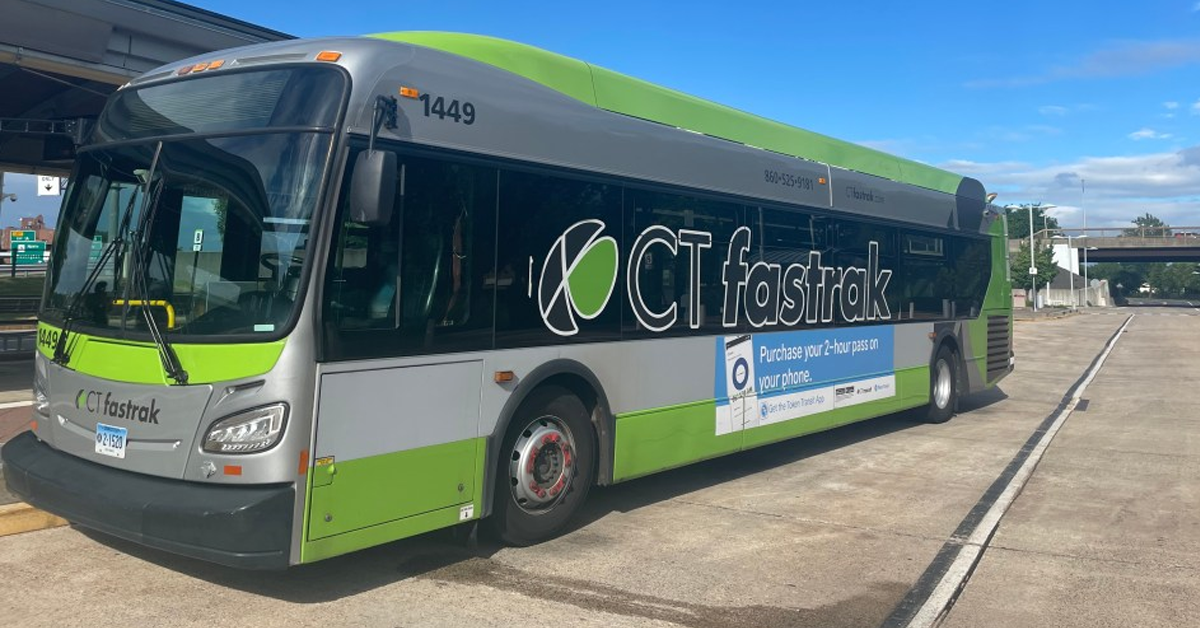
Connecticut’s Transportation Committee’s Public Hearing on March 2 featured competing ideas about how to address safety concerns for public transit bus operators in the state. There were two proposals: create a Public Transit Workplace Health, Safety, and Violence Prevention Committee, or evaluate how the criminal justice system deals with people who commit assault.
The former proposal comes from the proposed bill HB 5236, or “An Act Concerning Workplace Health, Safety and Violence Prevention for Public Transit Workers.” If approved, the Department of Transportation (DOT) will create a committee with two public transit bus operators, two representatives of management for each transit district, and a nonvoting member of the committee that would be designated by the Commissioner of the DOT.
This committee would produce a workplace health, safety, and violence protection plan by Jan. 1, 2028, which would propose, among other things, protocols and procedures to address unsafe work environments, including supporting transit workers who are victims of violence.
Out of the 21 written testimonies submitted to the committee for the public hearing, 13 supported the bill, two opposed it, and six neither supported nor opposed it.
There is a clear split in the testimonies: union members support the bill, and the directors of regional transit authorities submitted testimonies to provide context to the bill, but not to support or oppose it. The two people who testified against the bill were Mary Tomolonius, the executive director of Connecticut Association for Community Transportation (CACT), and DOT Commissioner Garret Eucalitto.
“I think we should have a conversation about people being held accountable when they assault our transit operators,” Eucalitto said before the public testimony portion of the hearing, when he was answering questions from the committee members. “That’s not discussed in [the bill], and I think that’s something. What is the judicial system doing with individuals who are assaulting our operators?”
He wants to see the DOT support transit employees who have been victims of assault in pressing charges against the perpetrators, he said. As for the proposals in HB 5236—they’re largely redundant, he argued.
“We track all safety measures, we track what is occurring on the bus, what is occurring outside the bus,” he told the Committee. “We have invested heavily in de-escalation training for the operators, we have invested in the infrastructure to protect the operators, we also have invested in security along [and] inside the CT Transit system, as well as along Fastrack and other locations. We have seen a marked improvement in safety.”
But some of the testimonies submitted in support of the bill paint a different picture.
Veronica Chavers, the president of the Stamford chapter of the Amalgamated Transit Unit (ATU), has worked as a bus driver for CT Transit for 34 years, she said in the testimony she submitted. In that time, she said she witnessed bus operators being “spit on, punched, slapped, knifed, cursed out, called terrible names, beat up and even shot at.”
She gave an example that she said happened around two years ago: a female bus driver, who was driving from Norwalk to Stamford, picked up a man at night. He did not pay his fare when he entered the bus, and she asked him twice to do so—something Ecualitto said discouraged in “de-escalation training.” On his way out, he spat on her through the protective barrier. Chavers claims that the union wasn’t notified of this incident, and when she asked “Management” why, she was told “only a small amount of the spit got on her” and “the Operator could have handled the situation differently to avoid the assault.”
ATU pulled the footage from her bus and submitted it to the Norwalk Police, Chavers wrote.
Ecualitto doesn’t deny that assaults occur, but he did say that the number of them has decreased in recent years.
But both Ecualitto and Chaver agreed on one thing: the victims of assault need to be supported, and the perpetrators of assault need to be prosecuted.
“Management tends to sweep a lot of bus assaults under the rug therefore, no one knows that it ever occurred,” Chaver wrote. She went on to say, “Because of what our members deal with regarding Bus Assaults, I am asking [the Committee] today to pass this bill (HB 5236.) This bill is very significant when it comes to saving our Bus Operators lives. This bill will protect our Operators from these assaults and hold these passengers accountable that assault our Operators.”




I fully support HB-5236
What bus drivers in reality are advocating is not only for the health and safety of drivers, but for the health and safety of passengers and the public.
Please call your representatives and ask to support HB-5236.
The transit system in Connecticut is a blatant mis use of taxpayer’s funds whether those funds come from the federal government or state funds it’s a waste. First off, the buses are too large and lethargic and cause numerous traffic delays by stopping anywhere to pick up passengers. The buses are much too large for what the use is. Sometimes there are 2 or less riders on the buses. The buses may be good for cities like Hartford, New Haven, Bridgeport, and Waterbury, but in smaller cities the landscape is vast and more spread out and the private transportation would be more efficient. This is a waste of taxpayers dollars that cost millions of dollars. This is a politician’s pet peeve and is a burdened on the shoulders of taxpayers. This service should be scaled back dramatically. With the costs of Connecticut’s electric rates insurance, and taxes, this service is unnecessary and wasteful.